
ENPT
Product Design & Full-Stack
Year
Role
Duration
Team
Tools
View Project
Brazilian designers can't answer 'where am I and what's missing for the next level' — and managers calibrate seniority by gut feeling, with loose spreadsheets.
Product Designer & Full-Stack, solo: market research, PRD, design system, code, infra and monetization, from zero to deploy.
Full SaaS live, solo, from PRD to deploy: ~88-skill self-assessment, radar, self × manager gap, per-person development plan and Stripe subscriptions.
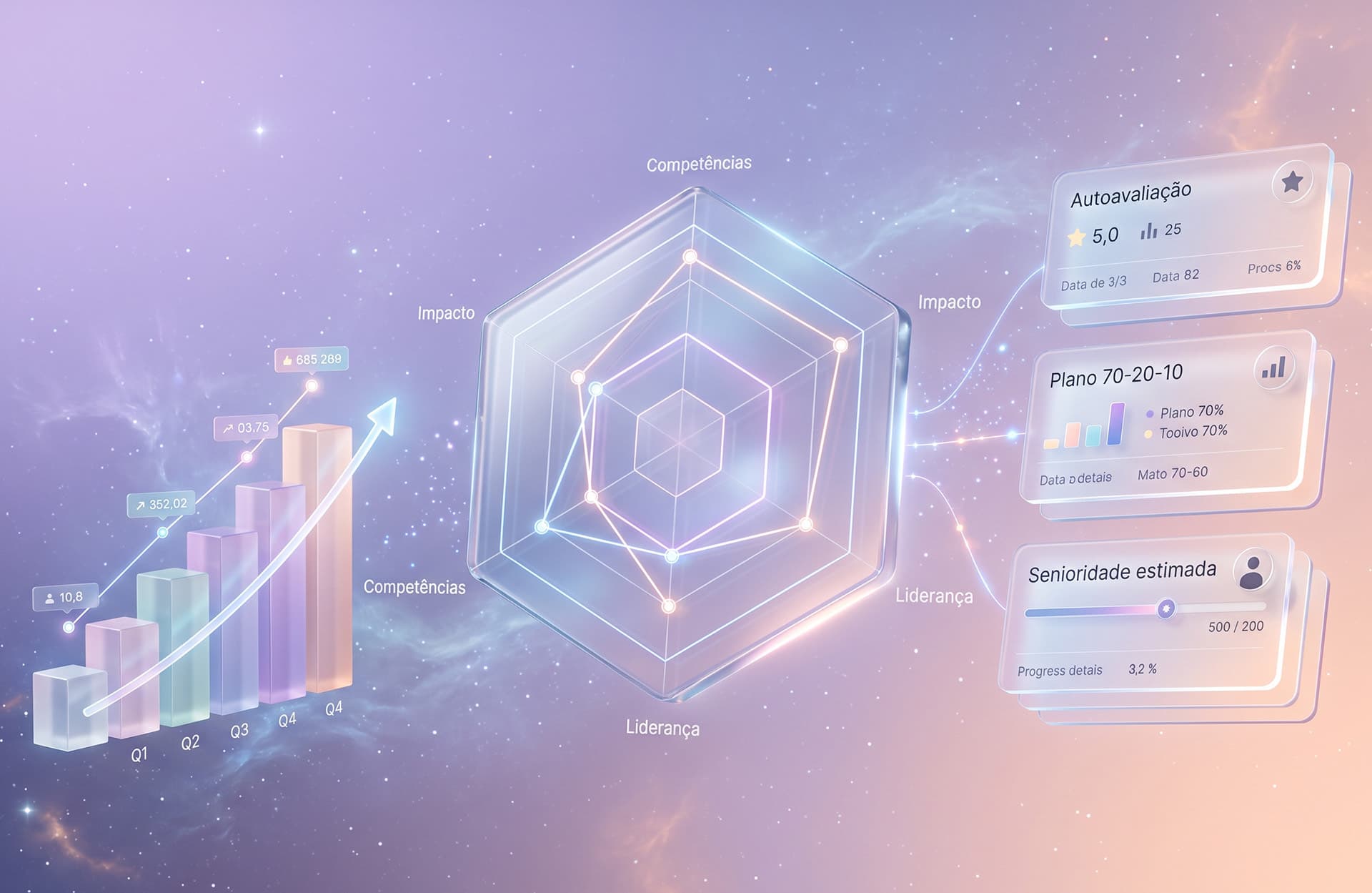
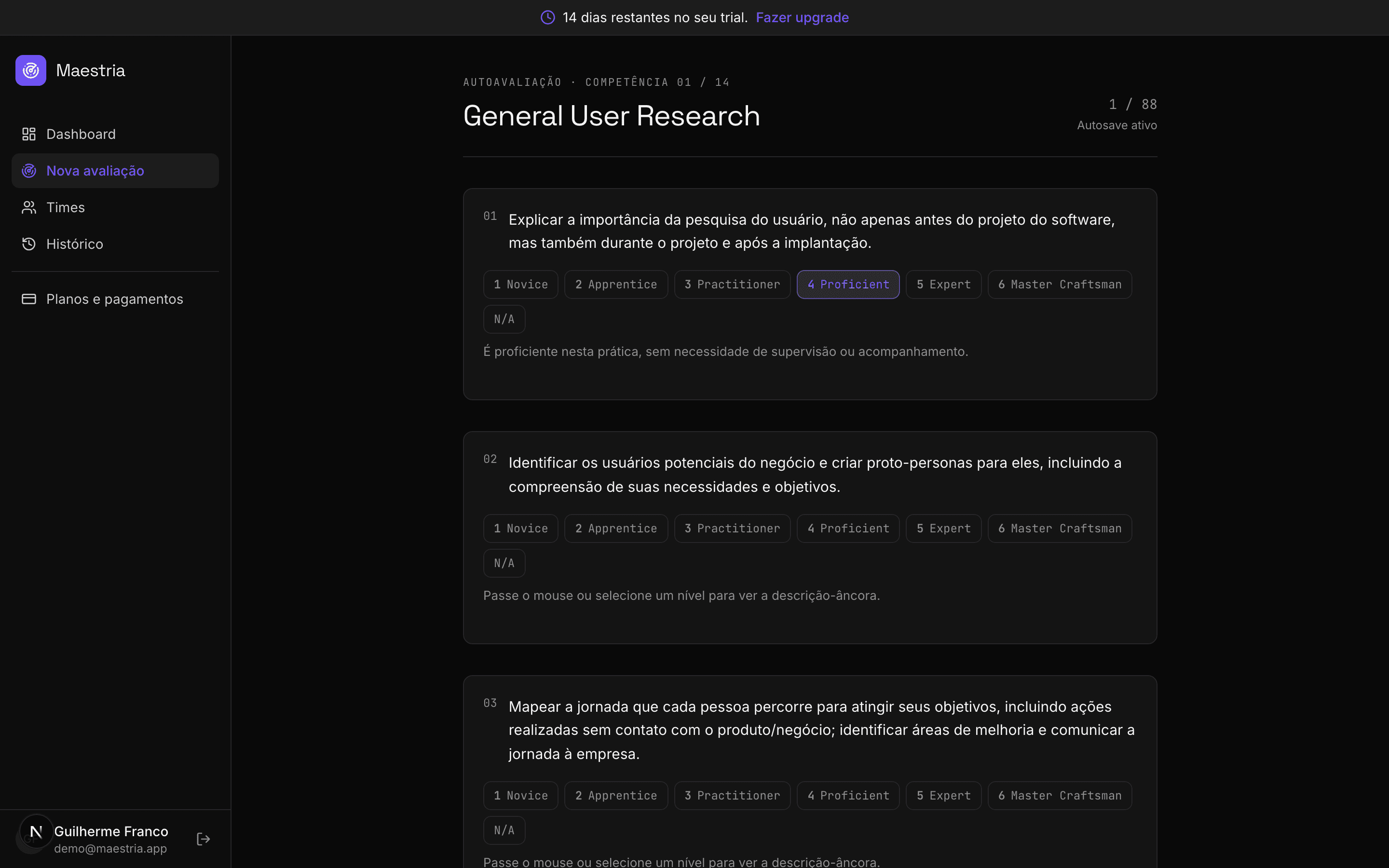
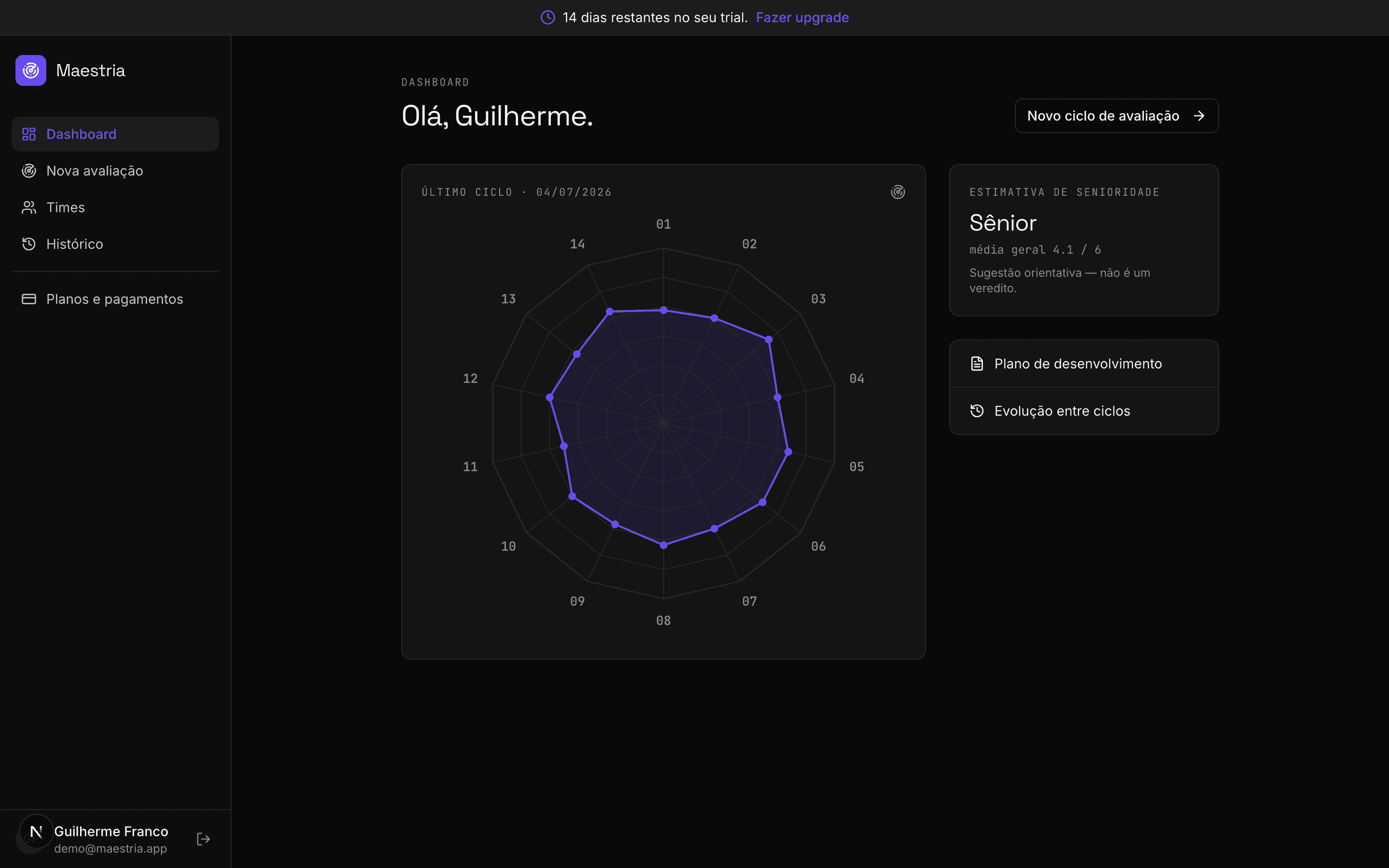
Portuguese-first SaaS for assessing and developing UX/Product Design competencies. You assess yourself against a framework of 14 competencies and ~88 skills on the 6-level Dreyfus scale, and get a radar, a seniority estimate on the Brazilian ladder and a 70-20-10 development plan. The same framework serves managers: self × manager gap, aggregate team radar and per-person development plans.
UX professionals in Brazil have no structured, trustworthy and affordable way to answer three questions: where am I? What's missing for the next level? And how does a manager calibrate this fairly across different people? Today this is solved with loose spreadsheets, informal self-assessments and seniority ladders that change from company to company. For the individual, the cost is a generic development plan and seniority negotiations without arguments. For the manager, it's gut-feeling decisions — unfair promotions, copy-paste development plans, turnover. The global tools attacking the problem (Uxcel, TalentGuard, Leapsome) are expensive, English-only and too generic for the Brazilian reality.
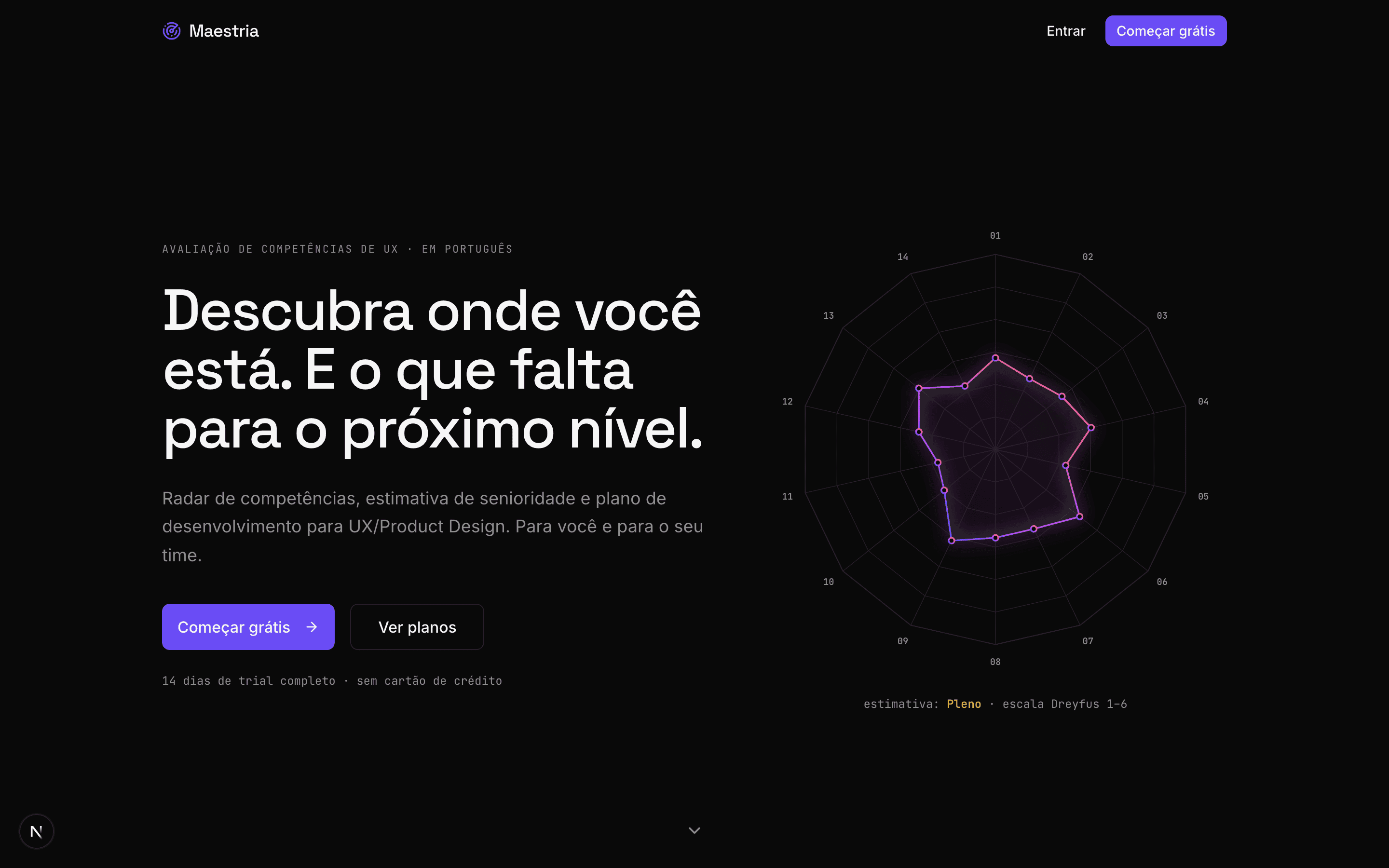
Research surfaced two truths that shaped the product. First: self-assessment carries systematic bias — beginners overestimate, experts underestimate — so an isolated score is worth little; the antidote is a behavioral anchor at every level plus confrontation with the manager's reading. Second: the revenue engine is not the individual, it's the team — the manager who needs to calibrate seniority and run data-driven 1:1s is the one who pays. The individual is top of funnel. No competitor combines a real UX framework, Portuguese, the Brazilian ladder and BRL pricing.
Someone who doesn't do motion can't be punished for it. 'Not applicable' is excluded from the average — it never counts as a low score.
The ladder varies across companies. The product always labels the result as an orientative suggestion — a conversation starter, not a verdict.
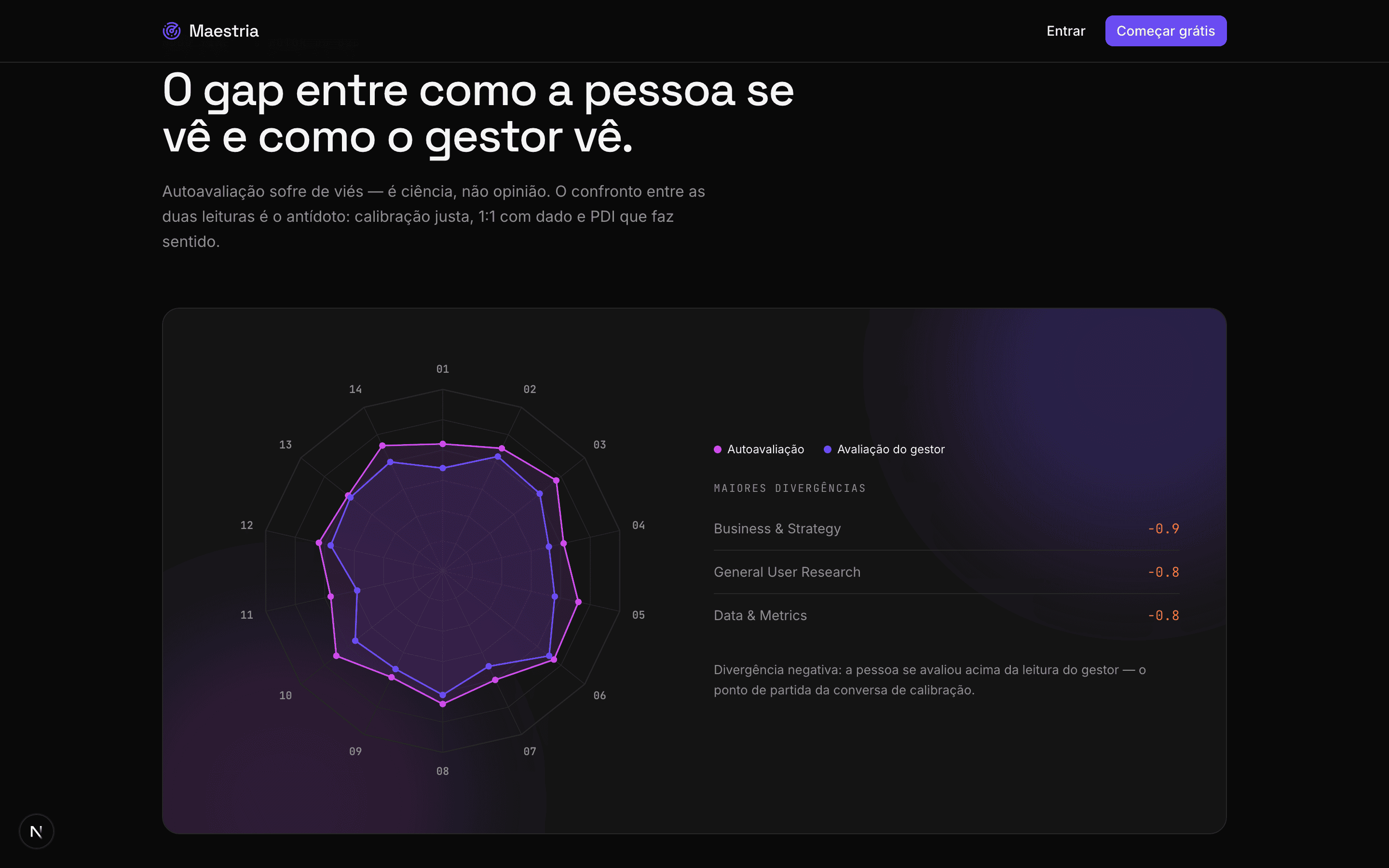
The divergence between self-assessment and the manager's reading isn't noise: it's the core calibration artifact and the main value of the team plan.
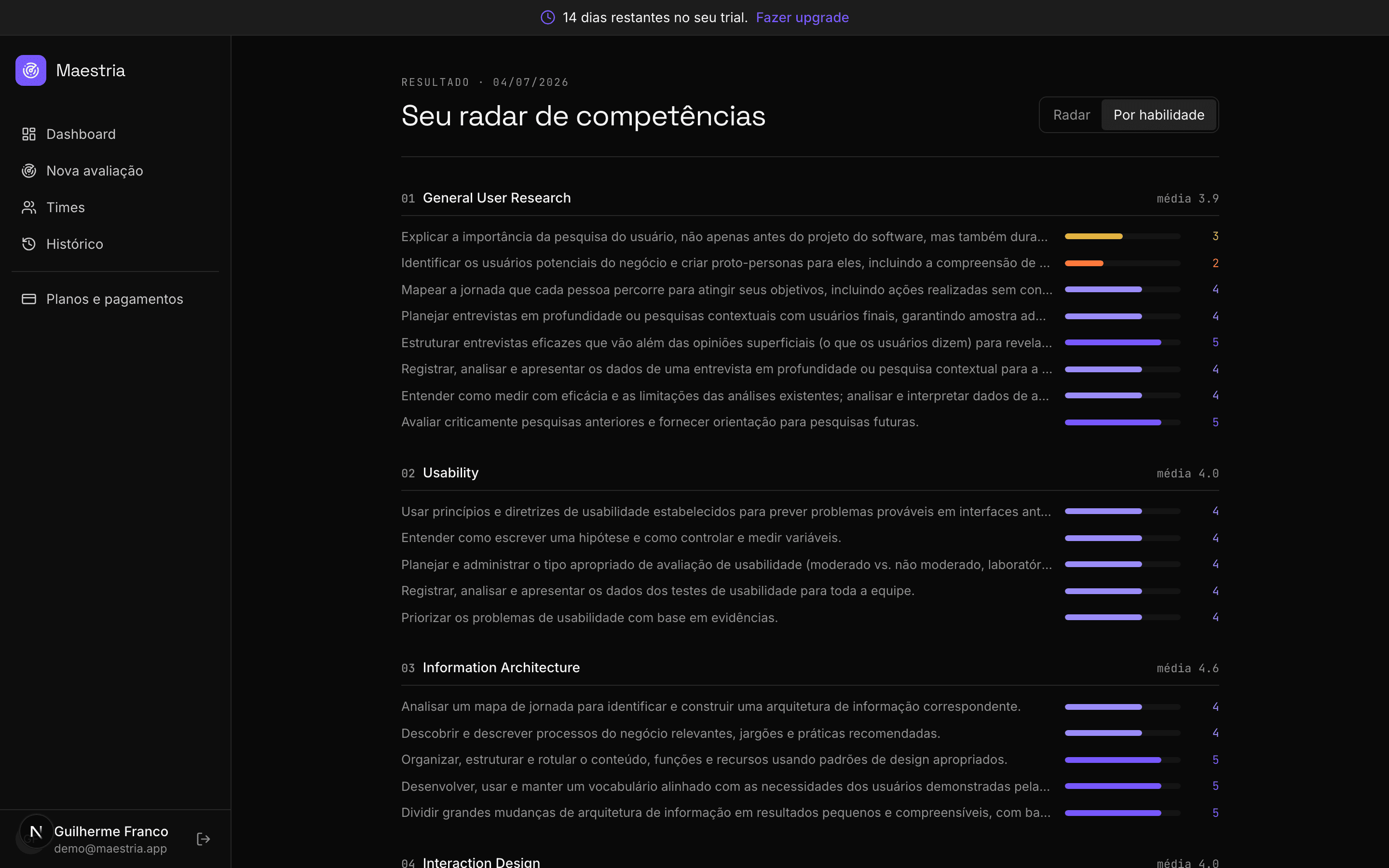
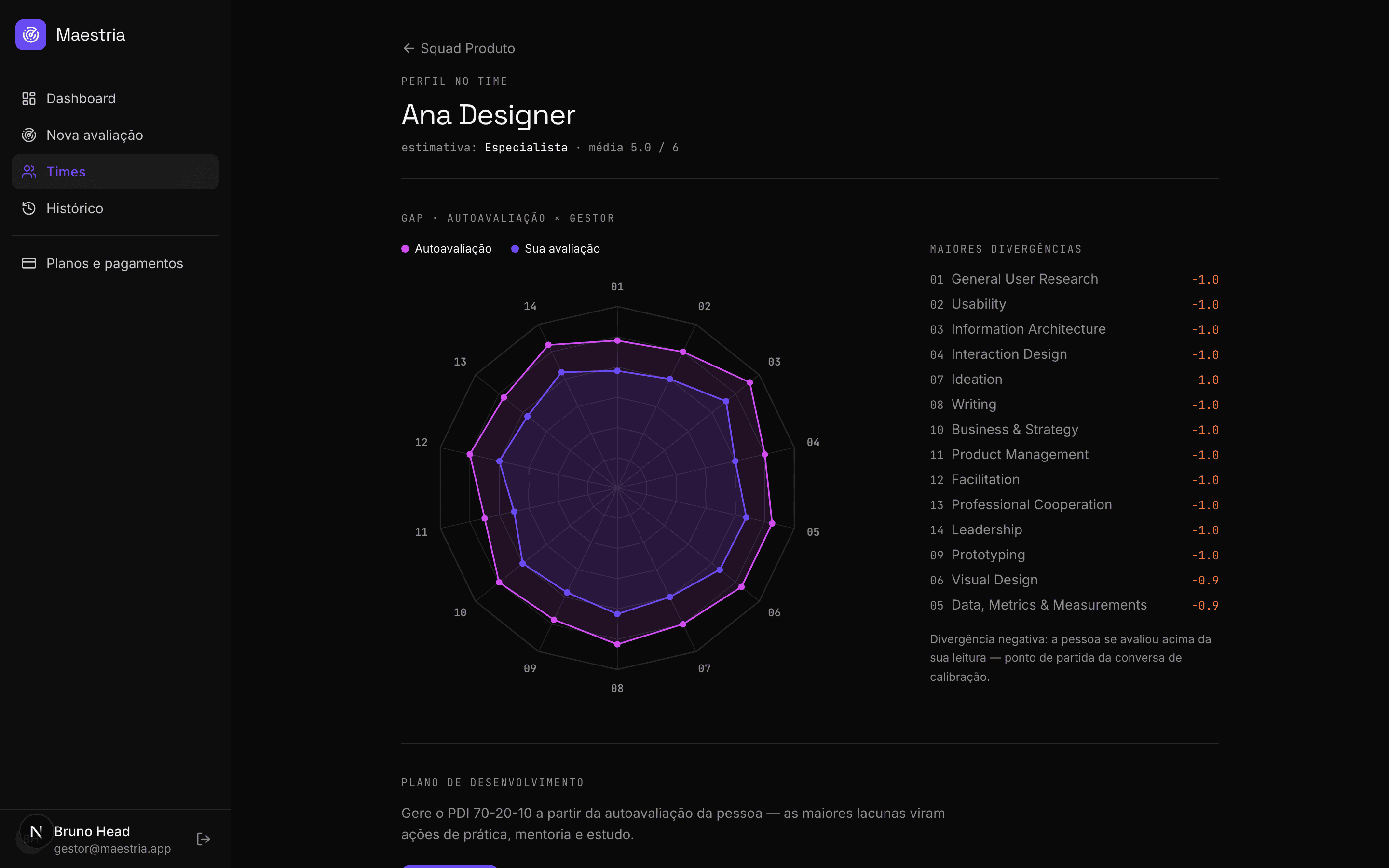
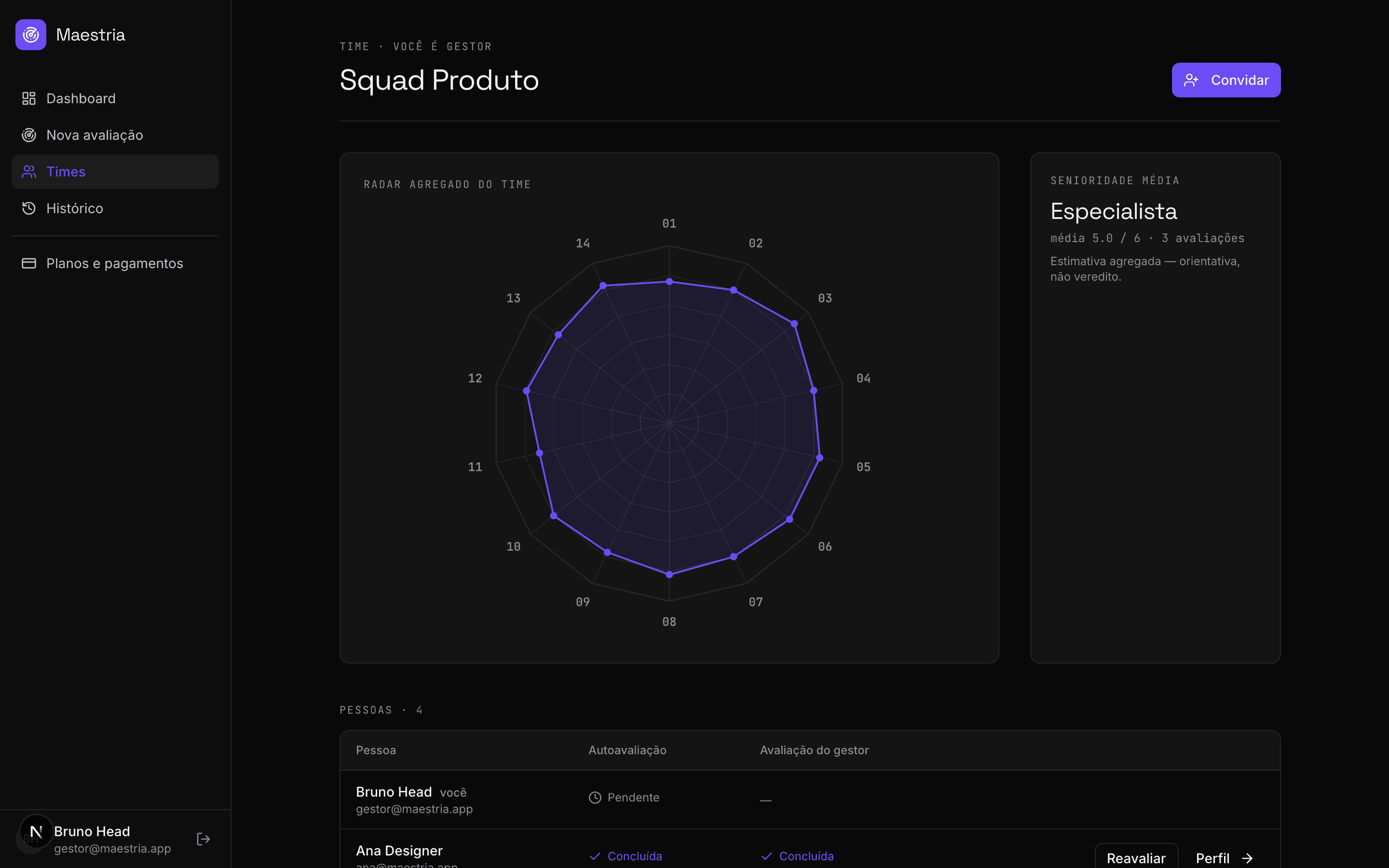
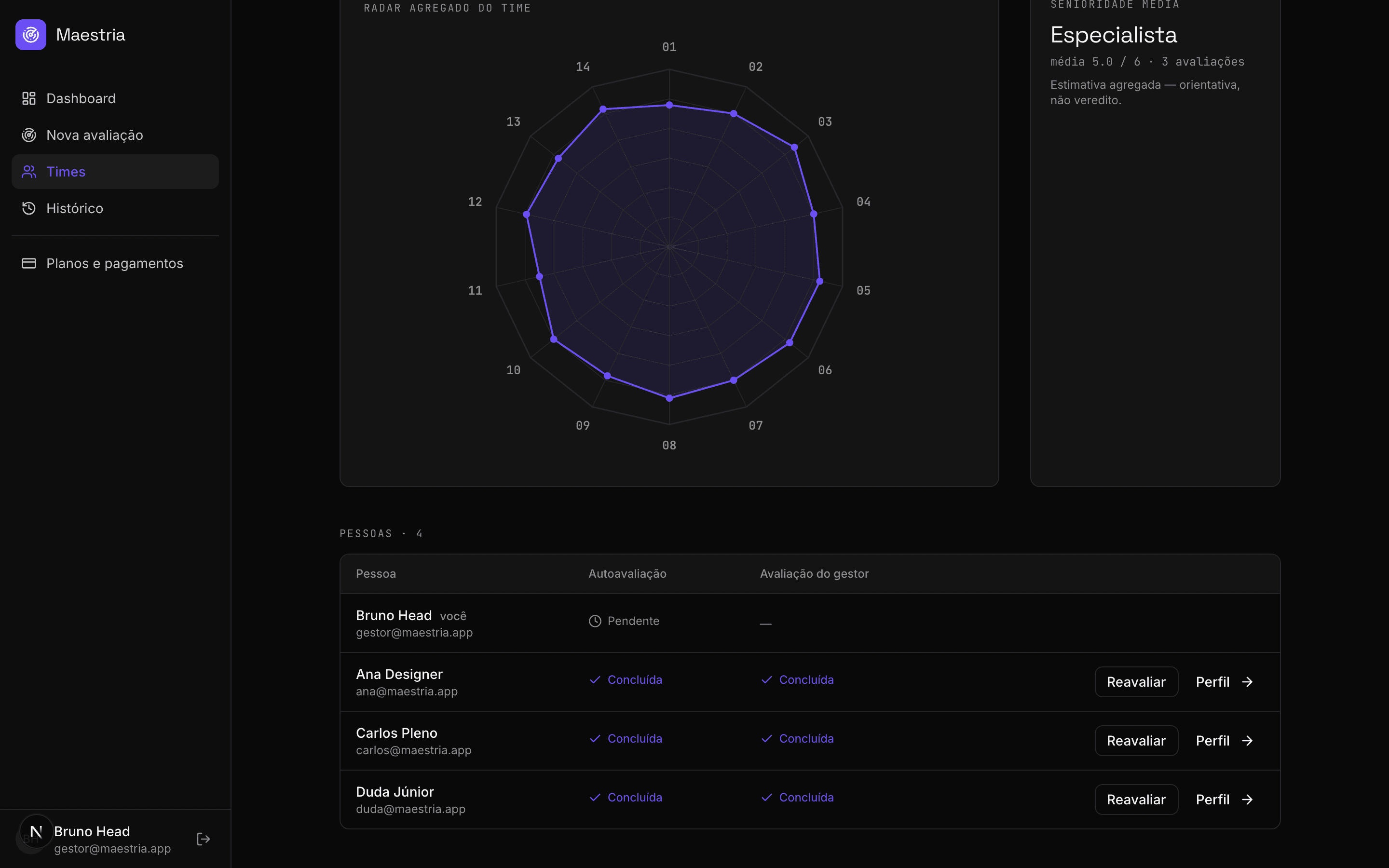
The manager creates a team, invites by link and assesses each person with the same flow as the self-assessment. The system then confronts both readings: the self × manager gap per competency and per skill, sorted by the largest divergences — a negative divergence means the person rated themselves above the manager's reading, and that's exactly where the calibration conversation starts. The module is completed by the aggregate team radar (collective strengths and gaps) and a per-person development plan generated by the same 70-20-10 engine as the individual plan: 70% on-the-job practice, 20% social learning, 10% formal study.

The visual language came from a study of public DESIGN.md files (Framer base): near-black canvas, charcoal surfaces separated by hairlines, compressed display typography (Space Grotesk) and a violet->magenta->orange gradient atmosphere used as a moment, never as a background. Everything is governed by a single token file that generates the CSS — zero hardcoded hex in components, enforced in CI. The 6-color level ramp carries its own semantics (warmth = developing, brand family = proficient+) and never communicates level by color alone: the mono number is always beside it. On the landing, GSAP drives continuous scrollytelling and the SVG 'living radar' morphs between seniority profiles.
An end-to-end functional SaaS: authentication (Google + magic link), 14-day trial, Pro and Team subscriptions with Stripe, a versioned framework in the database, assessment with autosave and immutable snapshots, radar, heatmap, 70-20-10 plan, cross-cycle history and the full B2B module — teams by invite link, manager assessment, gap, aggregate radar and per-person plans. The project also became an exercise in disciplined engineering: business rules locked by E2E tests (N/A excluded from averages, post-completion immutability, team isolation) and a wired design system where editing a token propagates to both product and Storybook.