
ENPT
Product Design · Conversão & Aquisição | Editora Globo
Year
Role
Duration
Team
Tools
Acquisition pages must convert without attracting the subscriber who churns early, and each page took days to ship in limited low-code tools.
Product Designer & Front-end: design and code of the pages and test variants. On my own initiative, I brought AI-assisted coding to the design team.
Winning variants become the standard across brand channels. In 2026, dozens of landing pages built with AI and 8 designers trained in Rio and São Paulo.
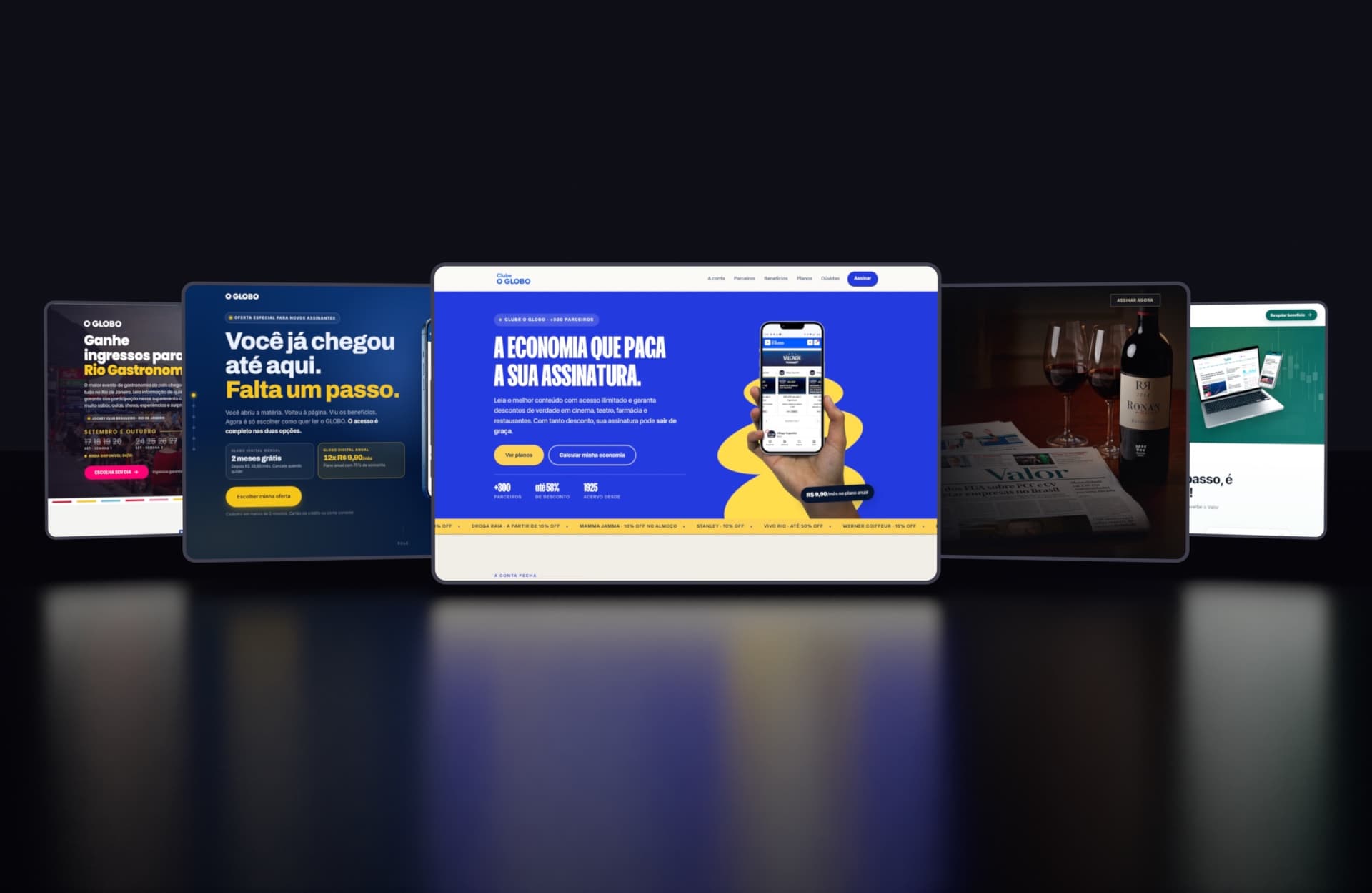
Since November 2022 I have designed and coded Editora Globo's subscription acquisition pages: O Globo, Valor Econômico, Clube O Globo and Edições Globo Condé Nast, plus partnerships and campaigns. The work started with a continuous A/B testing program, focused on growing conversion without sacrificing subscriber LTV. In 2026 I brought AI-assisted coding into the process, which cut the lead time of a landing page from days to under a day, and I trained the Institutional Marketing designers in Rio and São Paulo to work the same way.
Acquisition pages live in constant tension: they must convert now, but without attracting the wrong subscriber, who churns early and drags down LTV. Optimizing only for immediate conversion can be costly down the line.
There was also a production problem. Every campaign, partnership or offer needs a new page, and building one in limited low-code tools took days, with a result below what the brands called for.
In the A/B tests, the hypothesis originates in Digital Channels and Marketing consolidates the proposal. From there, the design and the code of the variants are mine: I structure the landing pages, put each test live and present the results together with Marketing.
On campaign and partnership landing pages, I do the design and the code end to end. And, on my own initiative, I drove AI adoption in the design team: I changed my own process, showed the result and trained the other designers. It is a front recognized by management, with no formal title yet.
Digital Channels spots the opportunity and Marketing consolidates the test proposal.
Hypotheses are prioritized by effort × impact before entering the queue.
I design and implement the variants in HTML, CSS and JavaScript. This stage is mine.
The test runs on an 80/20 model on Google Ads, preserving the institutional campaign's CPA.
Digital Channels measures the experiment and cross-references media data with the subscriptions CRM.
Marketing, design and channels decide together; the winning variant goes to internal channels.
Each cycle takes about two weeks. The program has run since 2022, with one or two active tests every month, covering O Globo, Valor Econômico and Clube O Globo.
Each test starts from a subscription-media benchmark and runs on an 80/20 model, preserving the institutional campaign CPA. The hypothesis that wins on Google Ads is taken to internal channels.
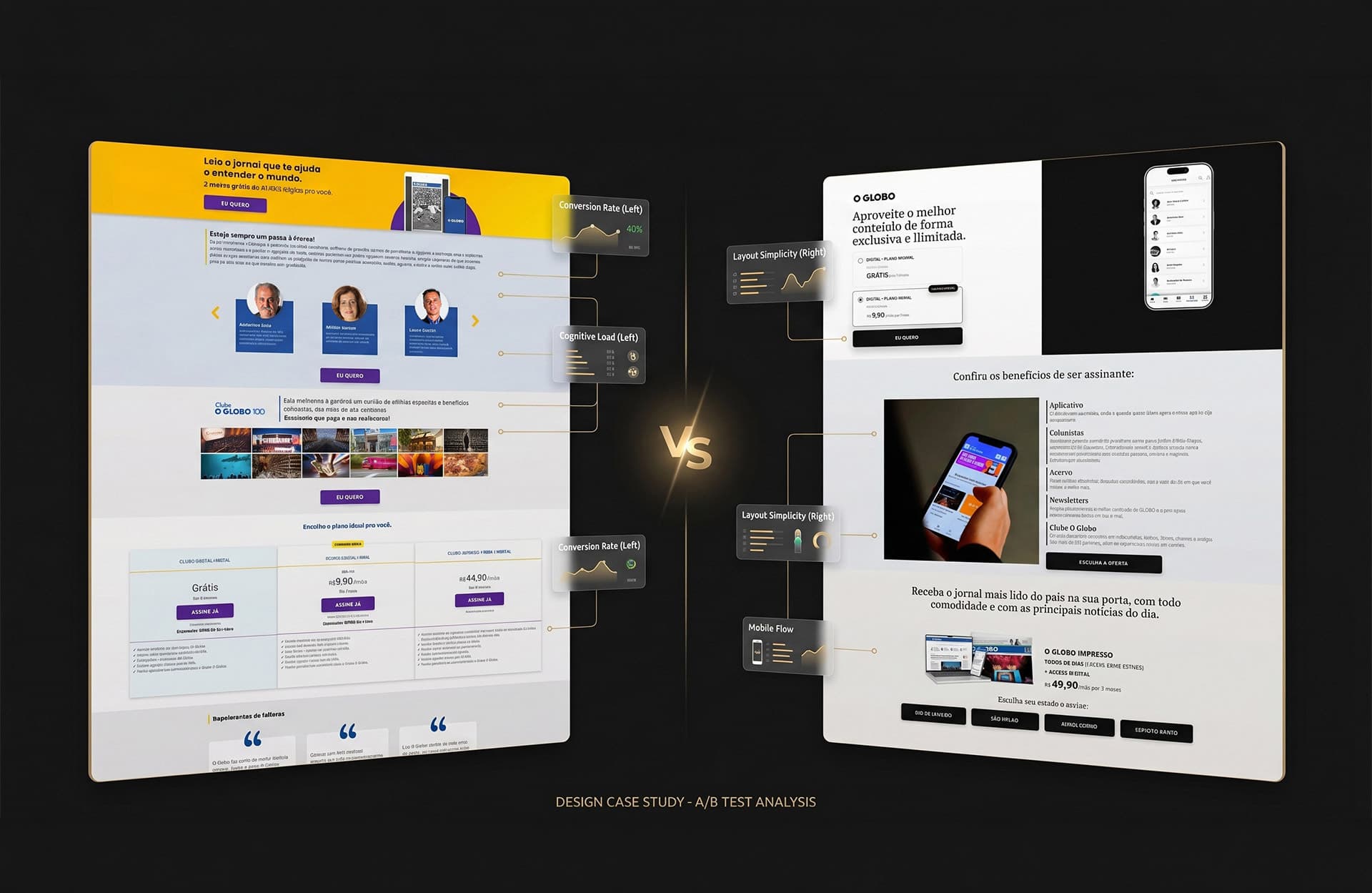
The winning variant is rarely a full redesign. It is almost always a reordering of priorities: bringing value and social proof up and making the decision easier.
The more direct approach outperformed the institutional one in conversion and margin.
Moving the print product to the top of the page raised the share of conversions and margin.
Adding the Globoplay tagline to the page improved conversion and margin.
The more direct version increased conversion and reduced cost per acquisition.
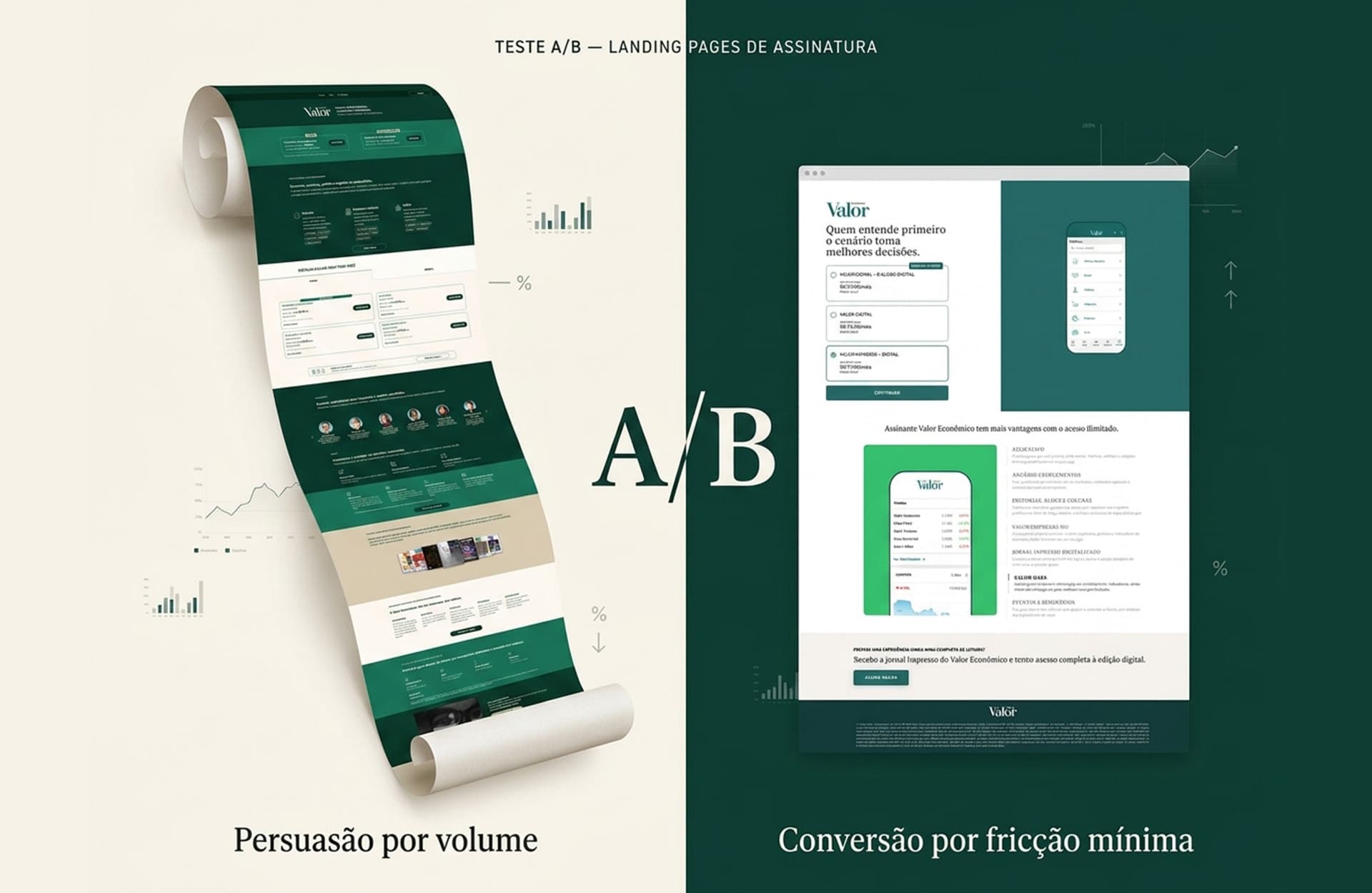
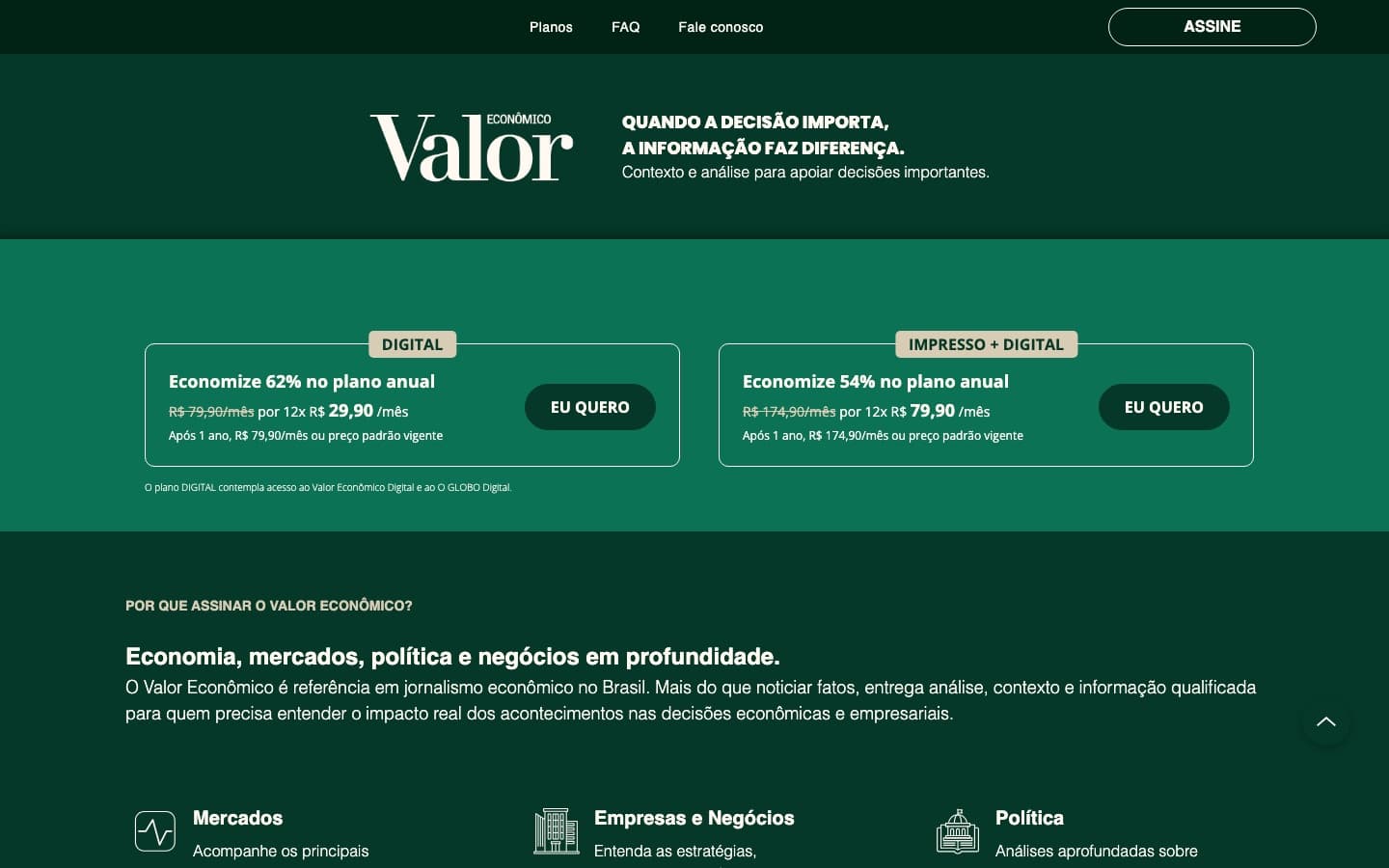
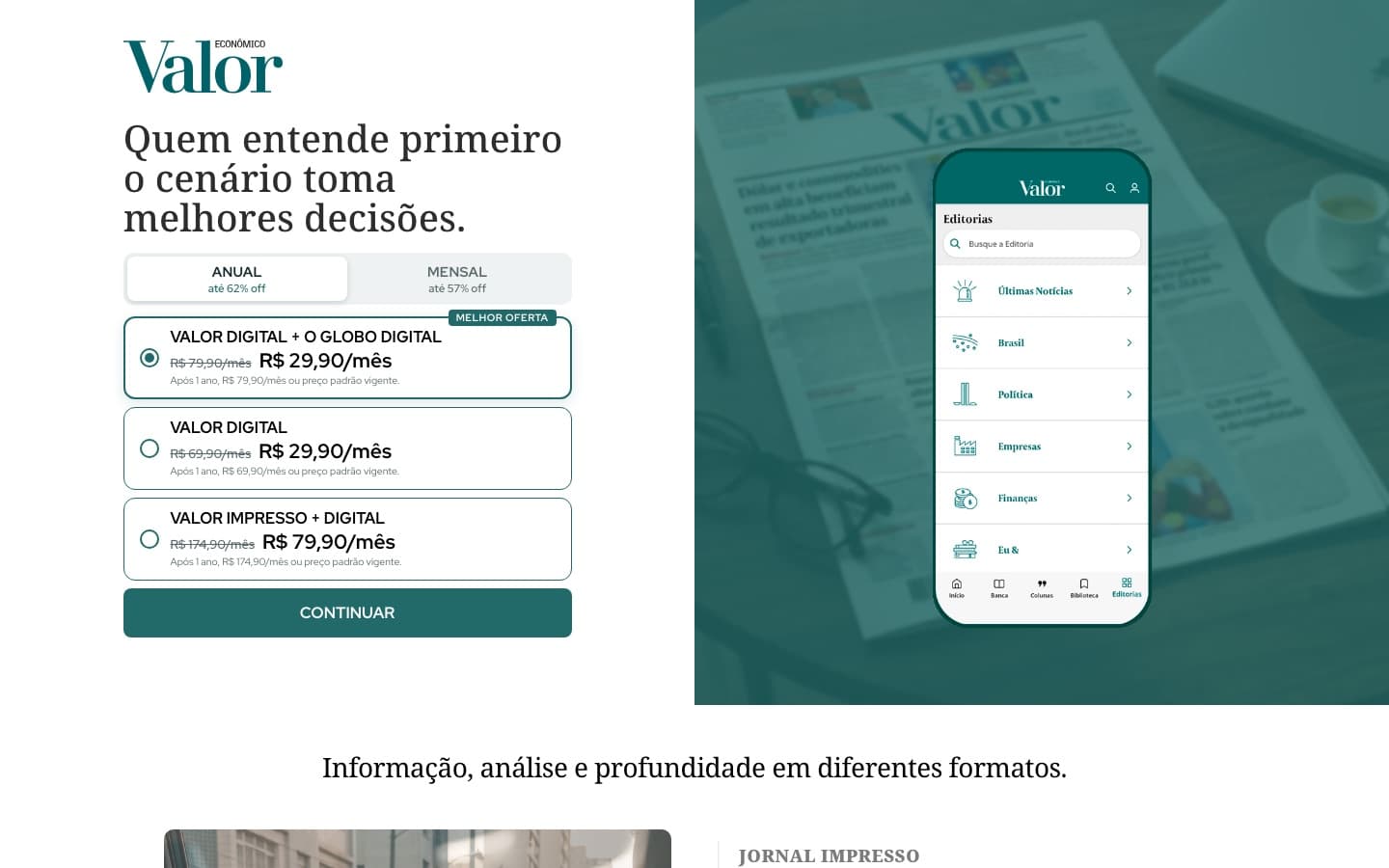
The most important learning did not come from comparing A and B, but from within the analysis: the media platform and the subscriptions CRM diverged on the same sales. Reading the result by the media's attribution model or by the CRM led to different decisions, which changed how the team decides which campaigns to scale.
Outside the testing program, each campaign calls for its own conversion mechanism. A winery partnership does not sell like a referral program, and a page for someone who has already seen the offer does not speak like a first-contact page. These are some of the pages I designed and coded in 2026.
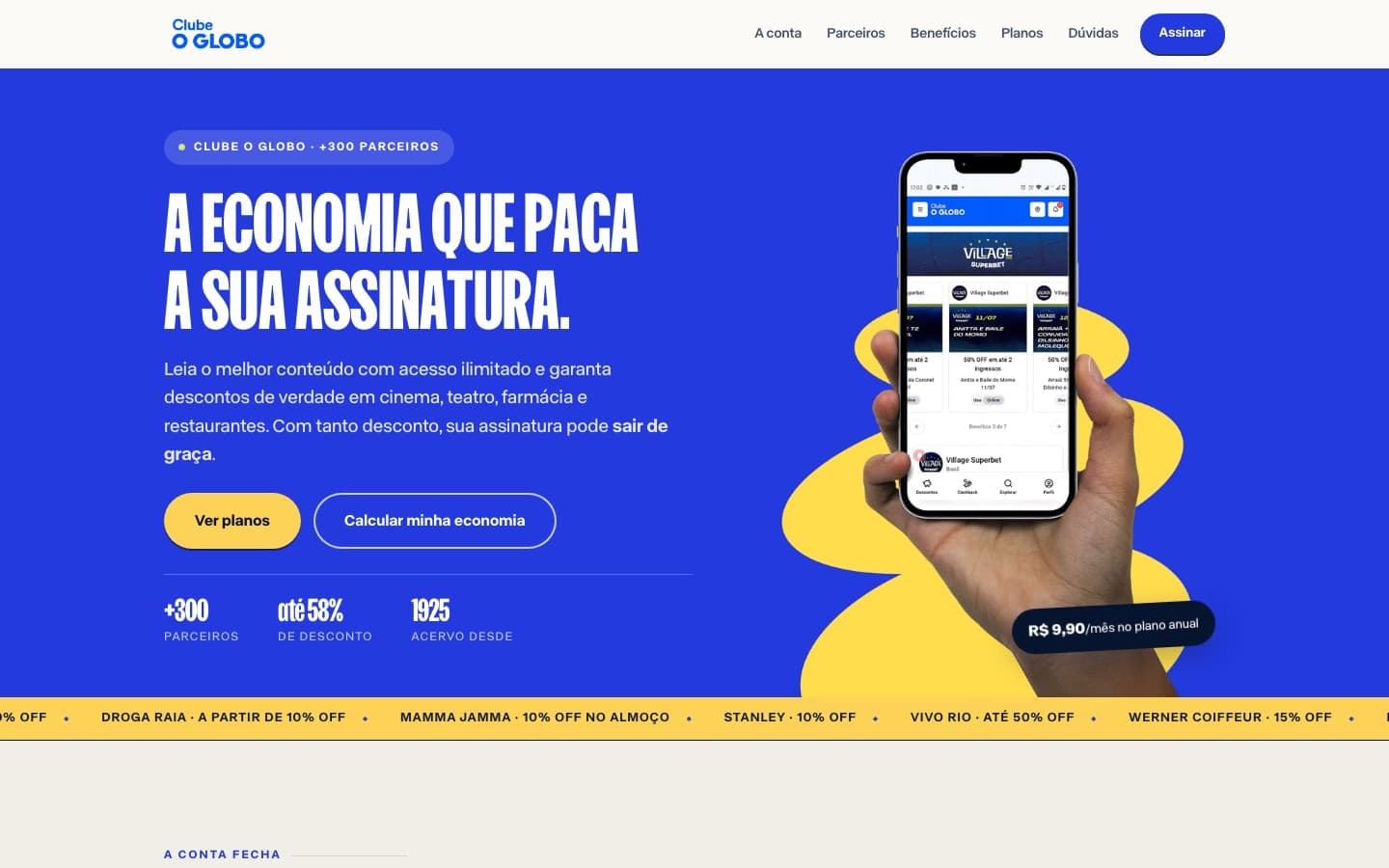
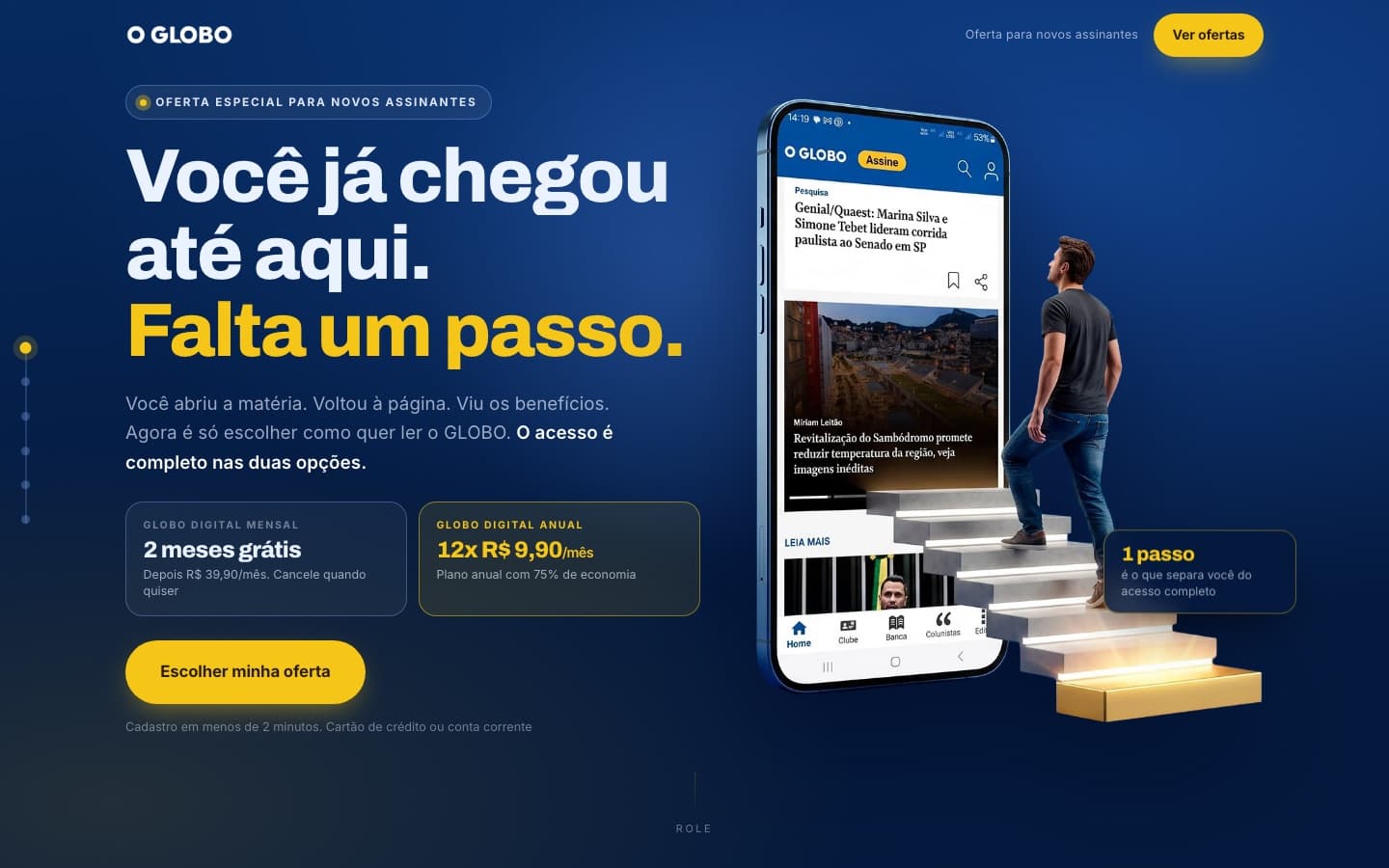
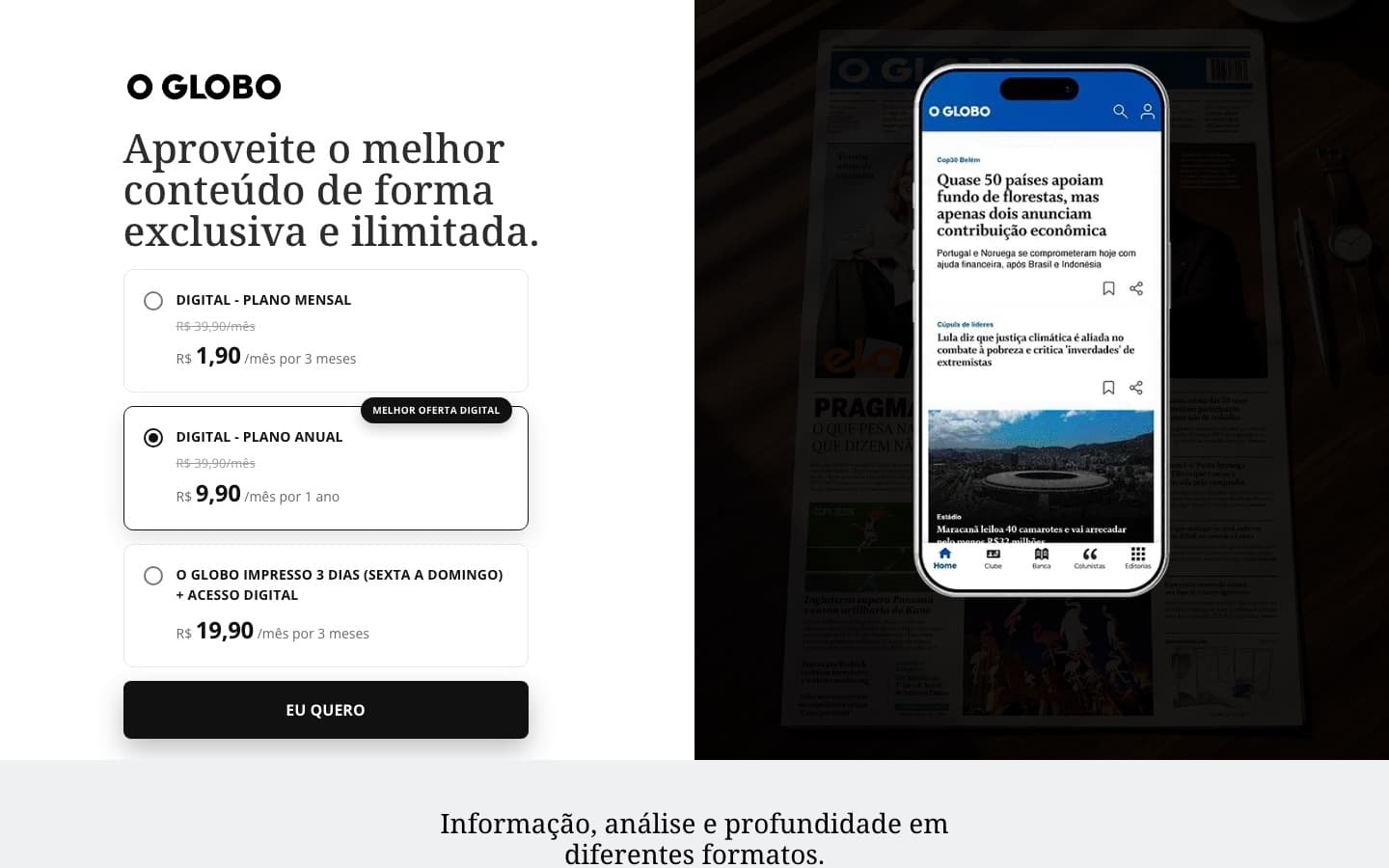
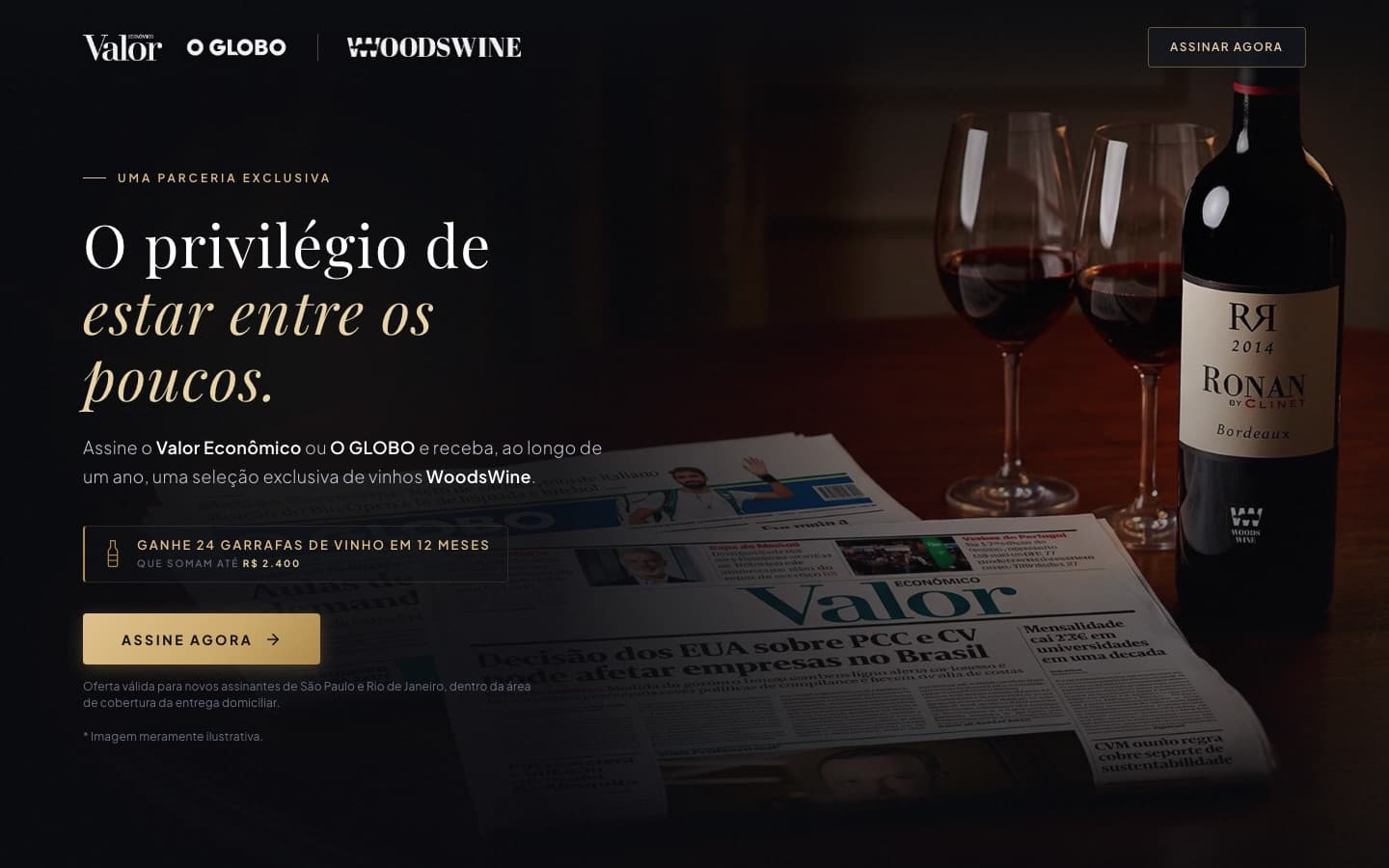
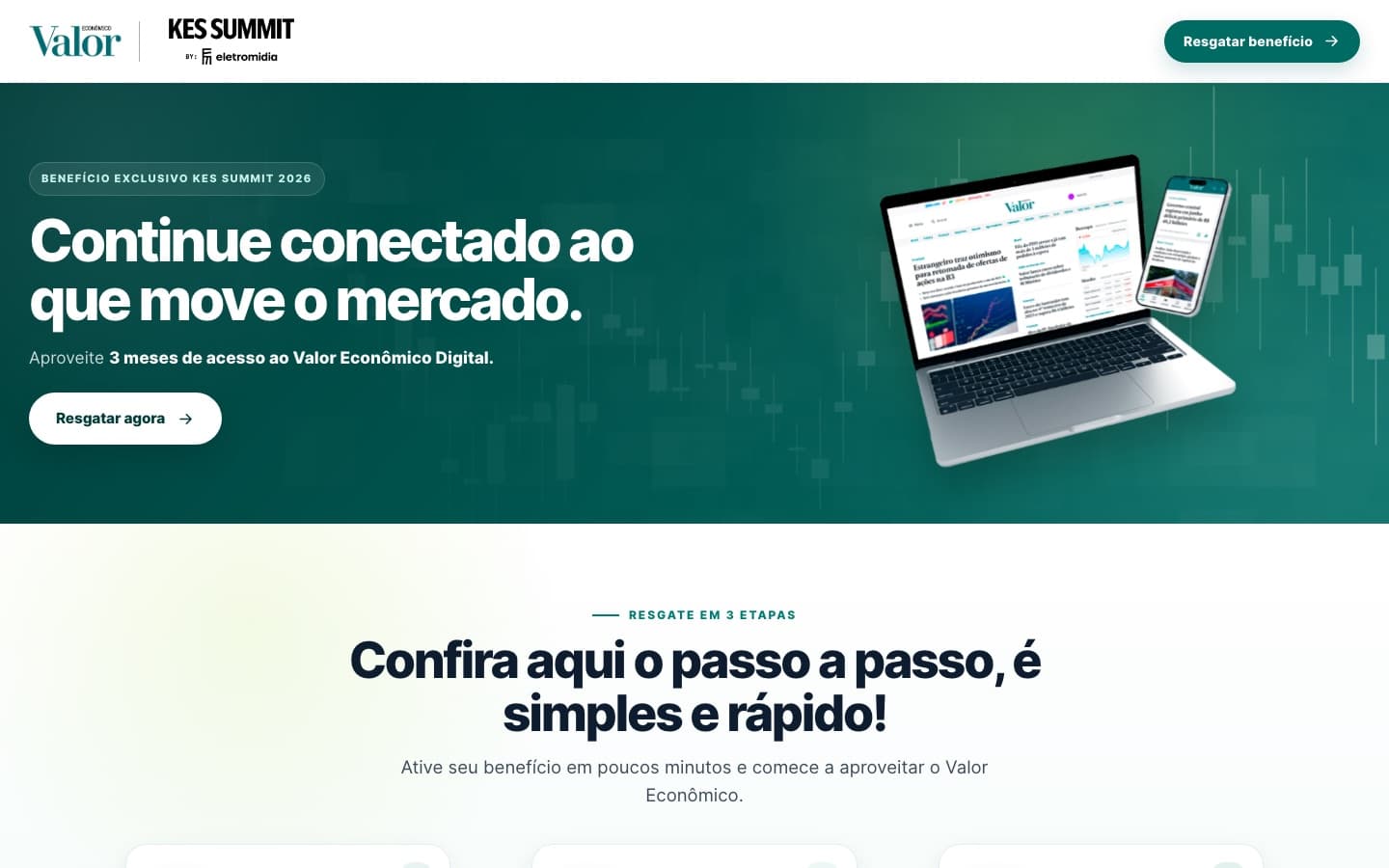
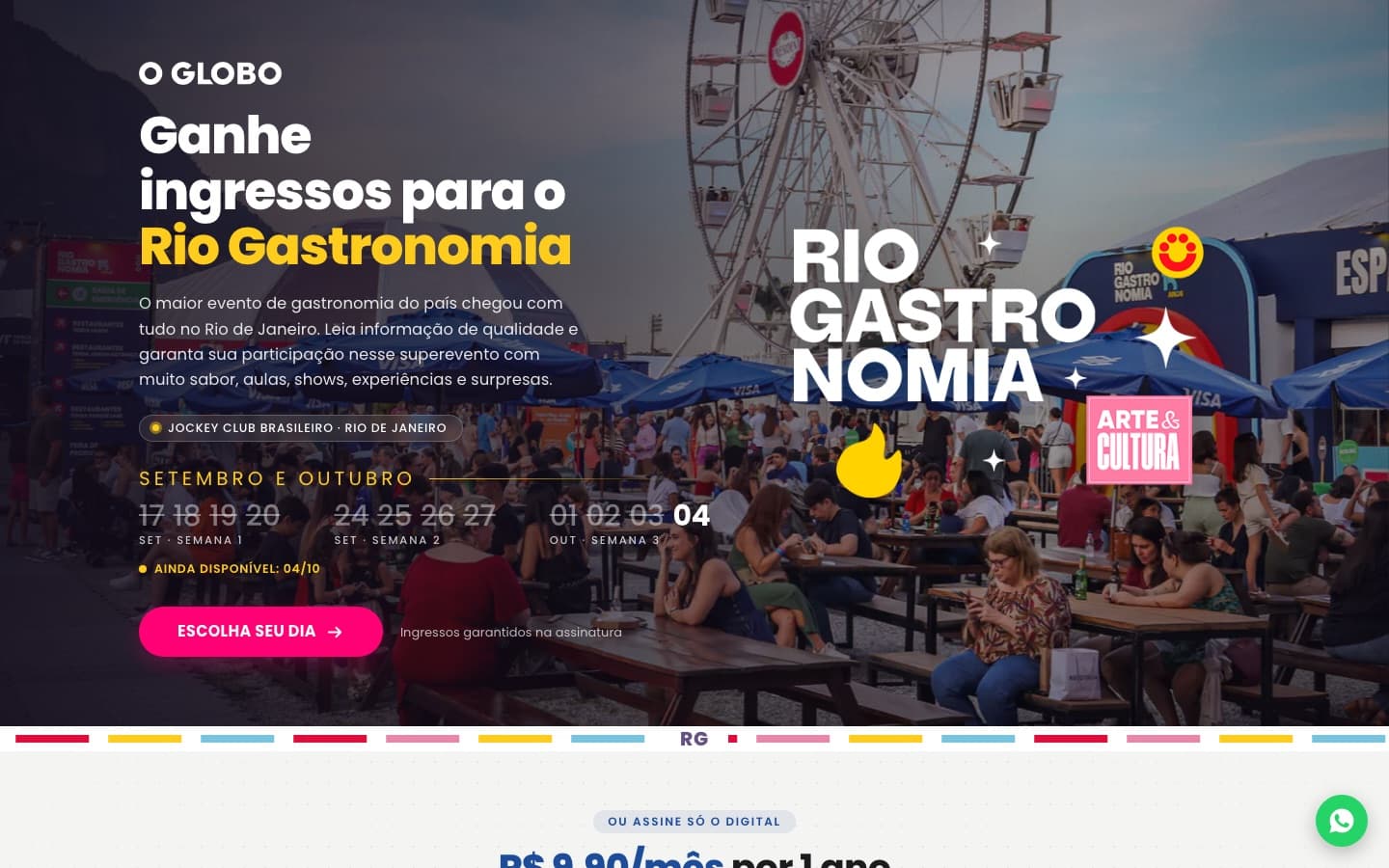
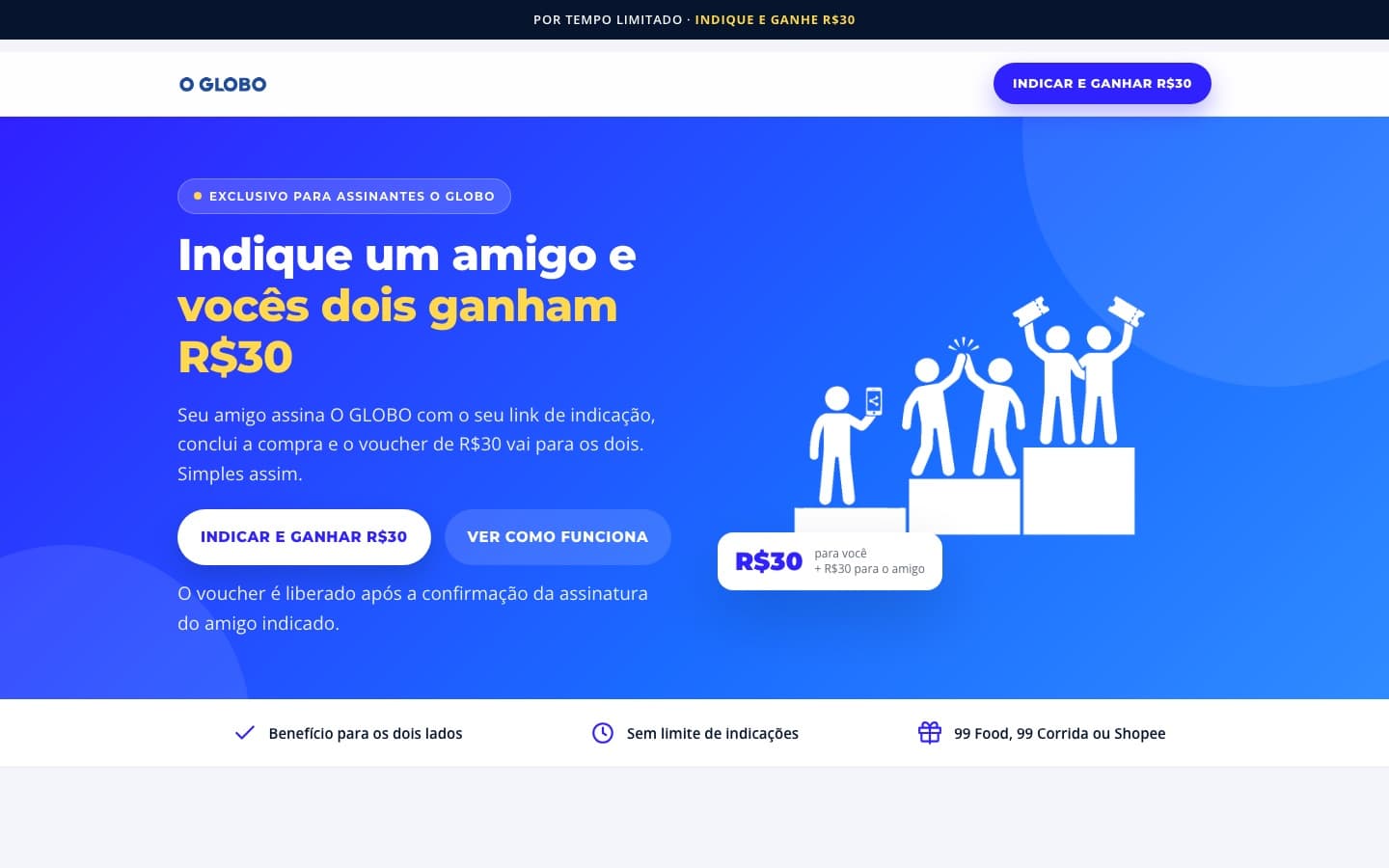
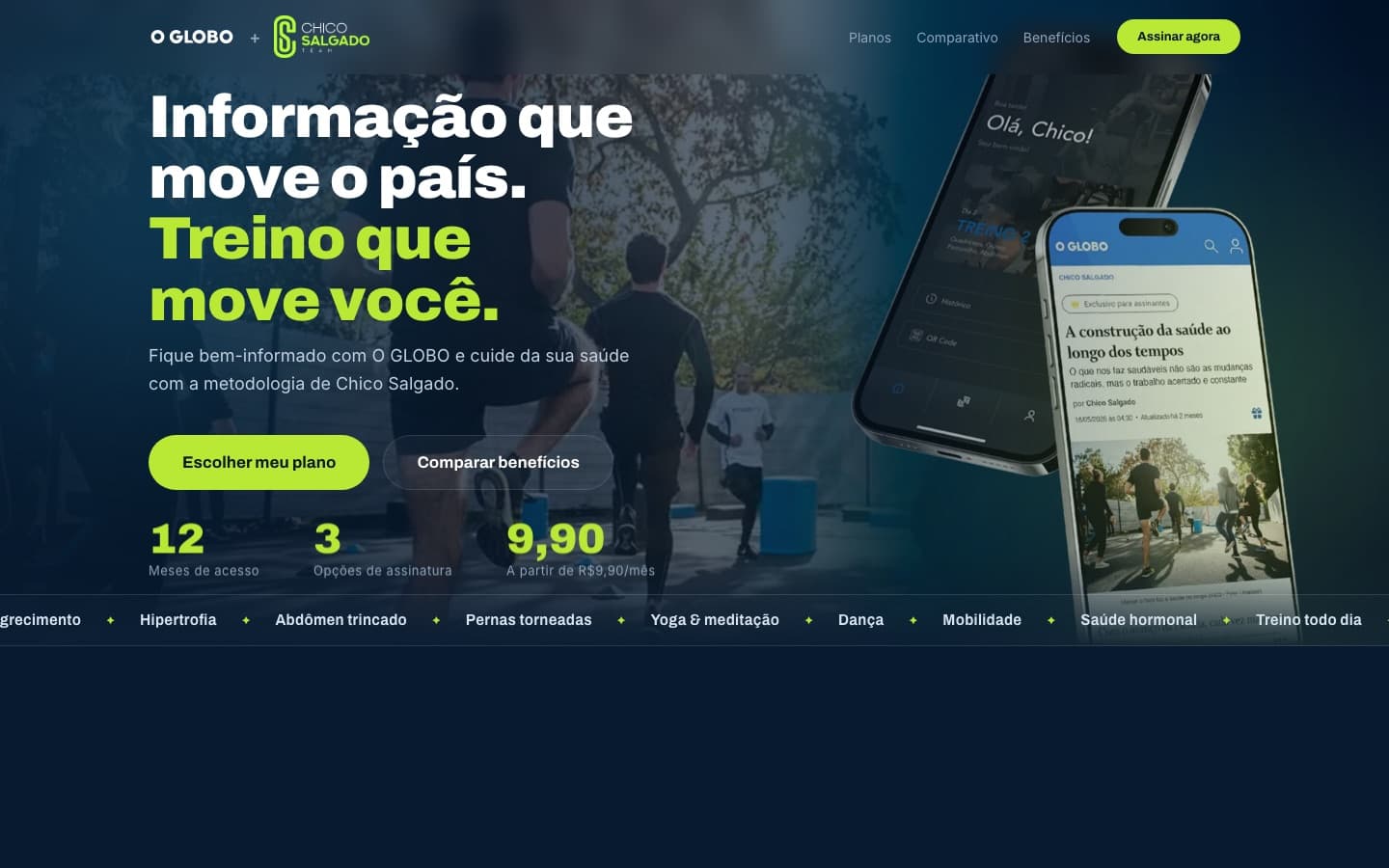
Until 2025, a campaign landing page took days and came out limited by what the low-code tool allowed. In 2026 I started building the pages with AI-assisted coding in Antigravity, a tool approved by Editora Globo.
The same page is now ready in under a day, in its own code, without the low-code constraints. The time saved goes into what did not fit the deadline before: a savings calculator, a remarketing narrative, a visual identity for each partnership. In a few months that added up to dozens of landing pages.
One faster designer does not fix a team bottleneck. I put together a one-hour workshop on building landing pages with AI-assisted coding and ran it for the Institutional Marketing designers: five in Rio de Janeiro and three in São Paulo.
After the workshop, the team started producing landing pages and marketing emails with higher quality and in less time, using the same workflow.
The conversion figures for each test are confidential and are not shown here. The focus is the direction of results and what each experiment taught.