ENPT
Product Design & Full-Stack
Year
Role
Duration
Team
Tools
View Project
Creators launching limited drops patch together generic e-commerce and one-off apps, with no priority waitlist, real scarcity or Pix.
Product Designer & Full-Stack, solo, from competitive analysis to deploy.
Live MVP: a storefront per creator, priority waitlist, countdown and in-house checkout with card and Pix.
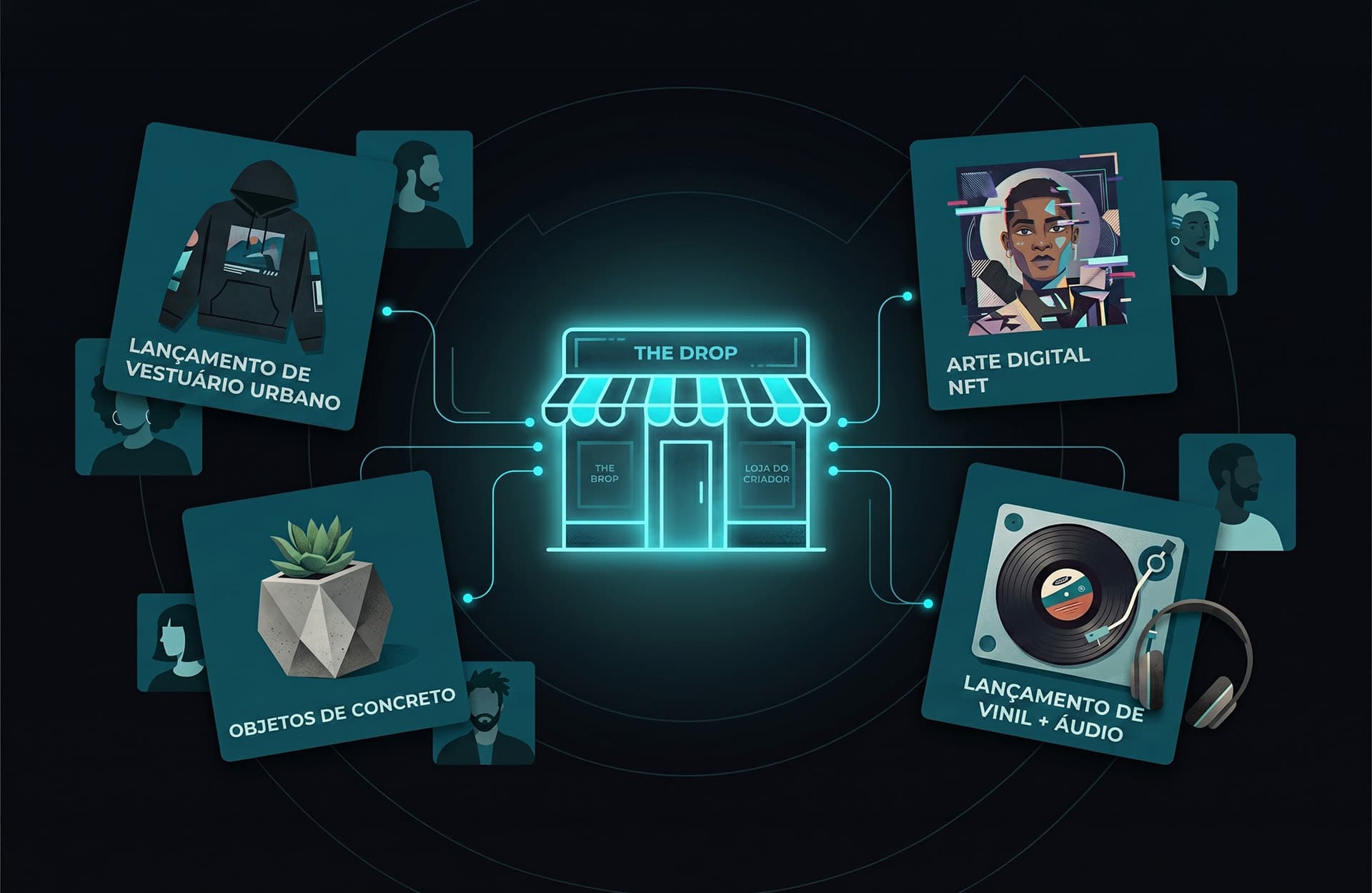
Storefront platform for creators and niche brands that launch products in limited drops — apparel, objects, digital goods. Each creator gets their own storefront with a priority waitlist, countdown and an in-house checkout with Pix, without redirecting to another platform.
Creators and niche brands — streetwear, art, objects, digital goods — increasingly sell in the drop format: limited runs, launched on a set date, that sell out in minutes. But there's no vertical tool built for it. Whoever launches drops today has to patch generic e-commerce (Nuvemshop, Shopify) with one-off waitlist apps, or build their own flow. The drop ritual — priority queue, real scarcity, countdown, hype — is always left to the creator. And in Brazil, the thing that matters most for this audience is missing: Pix at checkout.
The market splits into three layers: drop/engagement tools (Laylo), creator shops (Fourthwall, Bonfire) and generic e-commerce (Nuvemshop, Shopify). No player ties together priority waitlist + real scarcity + in-house checkout well — and none has native Pix. The open territory: being opinionated and vertical for drops, in PT-BR, with Pix. Drop's positioning came straight out of this analysis: 'Laylo notifies, Drop sells.'
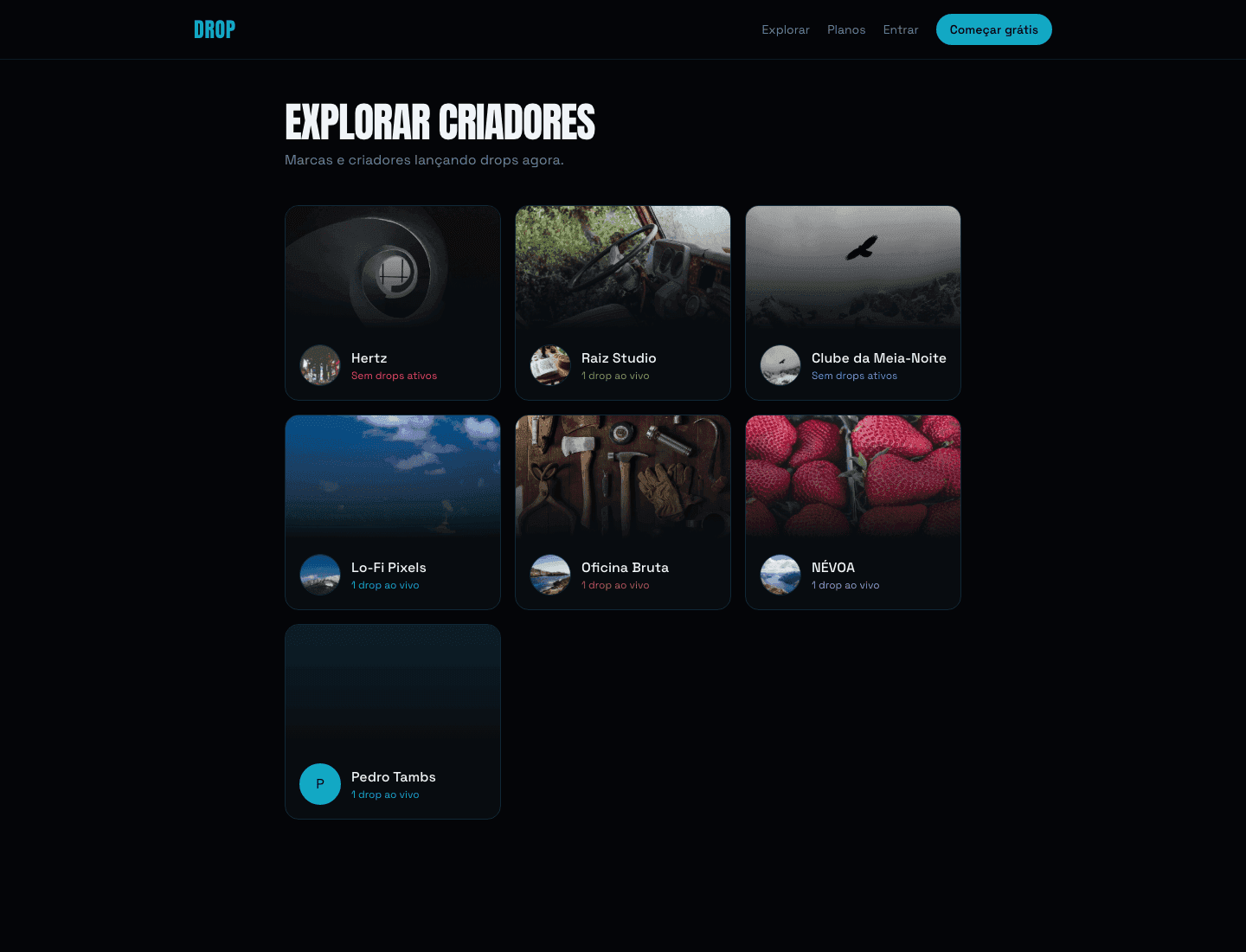
Drop is dark-first and opinionated: the creator doesn't build a site from scratch — they get a polished, ready-made storefront and customize only the essentials: brand, accent color, bio, cover. The landing communicates the positioning with display typography, an animated hero and Pix front and center. Each storefront inherits Drop's theme plus the creator's accent color, keeping a consistent identity without becoming a generic store builder. The core product decision: be vertical for drops, not 'just another store.'
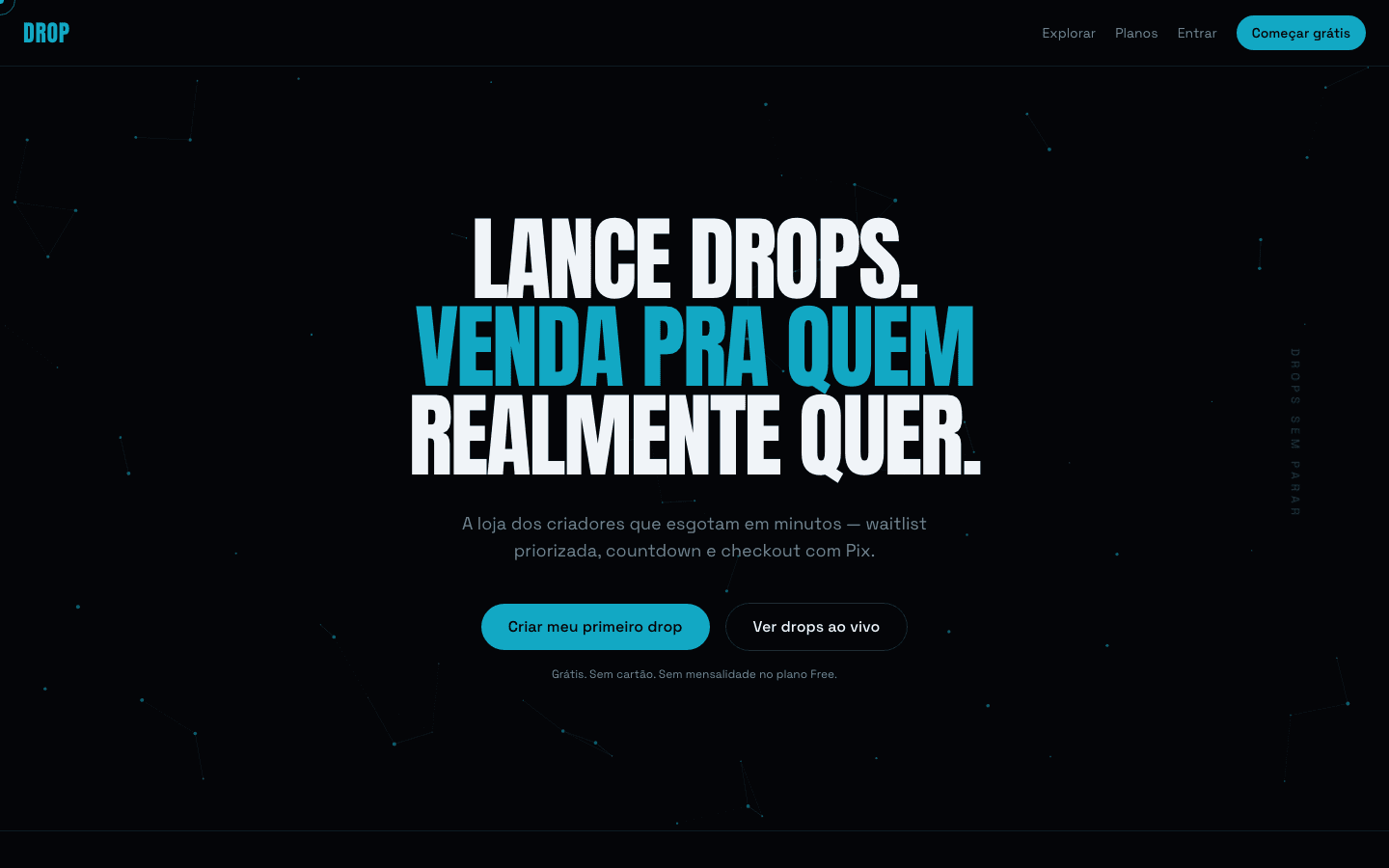
Every feature serves the drop cycle: create → gather the waitlist → sell out. The Drop Builder assembles the launch page with countdown, gallery and limited stock. The Waitlist Engine collects emails with priority early access. Checkout is in-house (card and Pix via Stripe), without leaving the store. The Order Manager handles orders and shipping; Analytics shows waitlist conversion and sell-out rate. Free (5% fee) and Pro (0% fee) plans differ by fee, not by access.
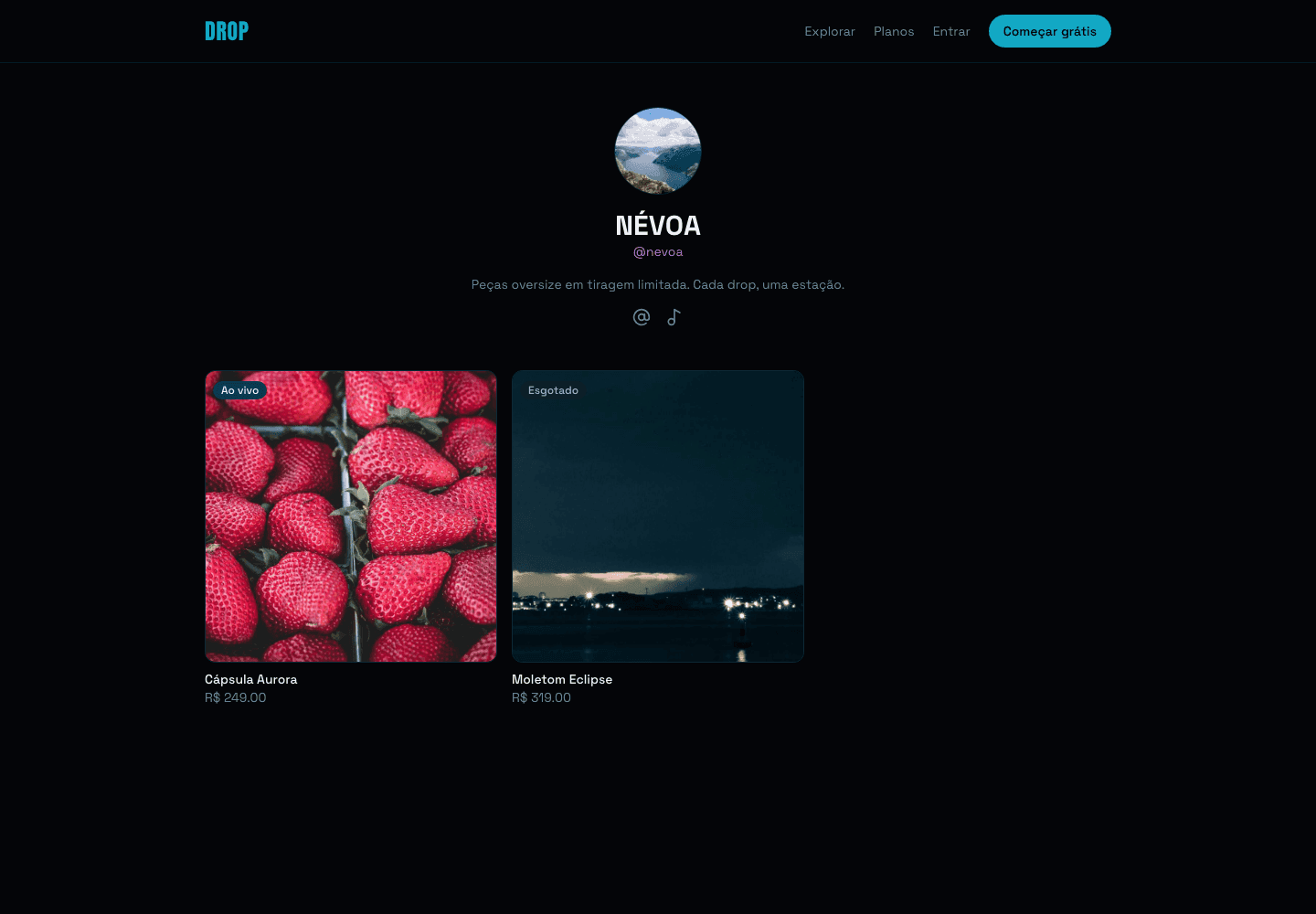
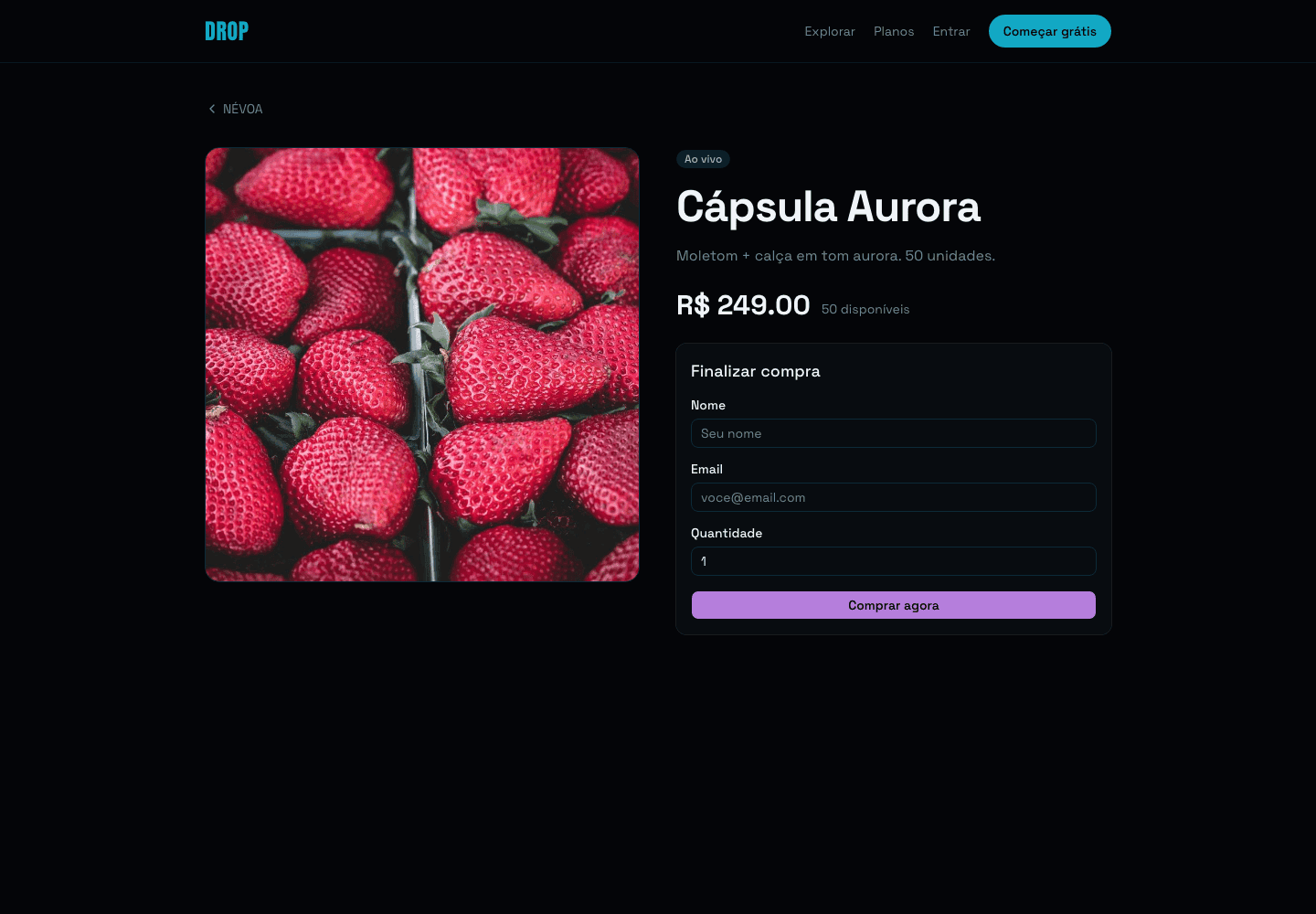
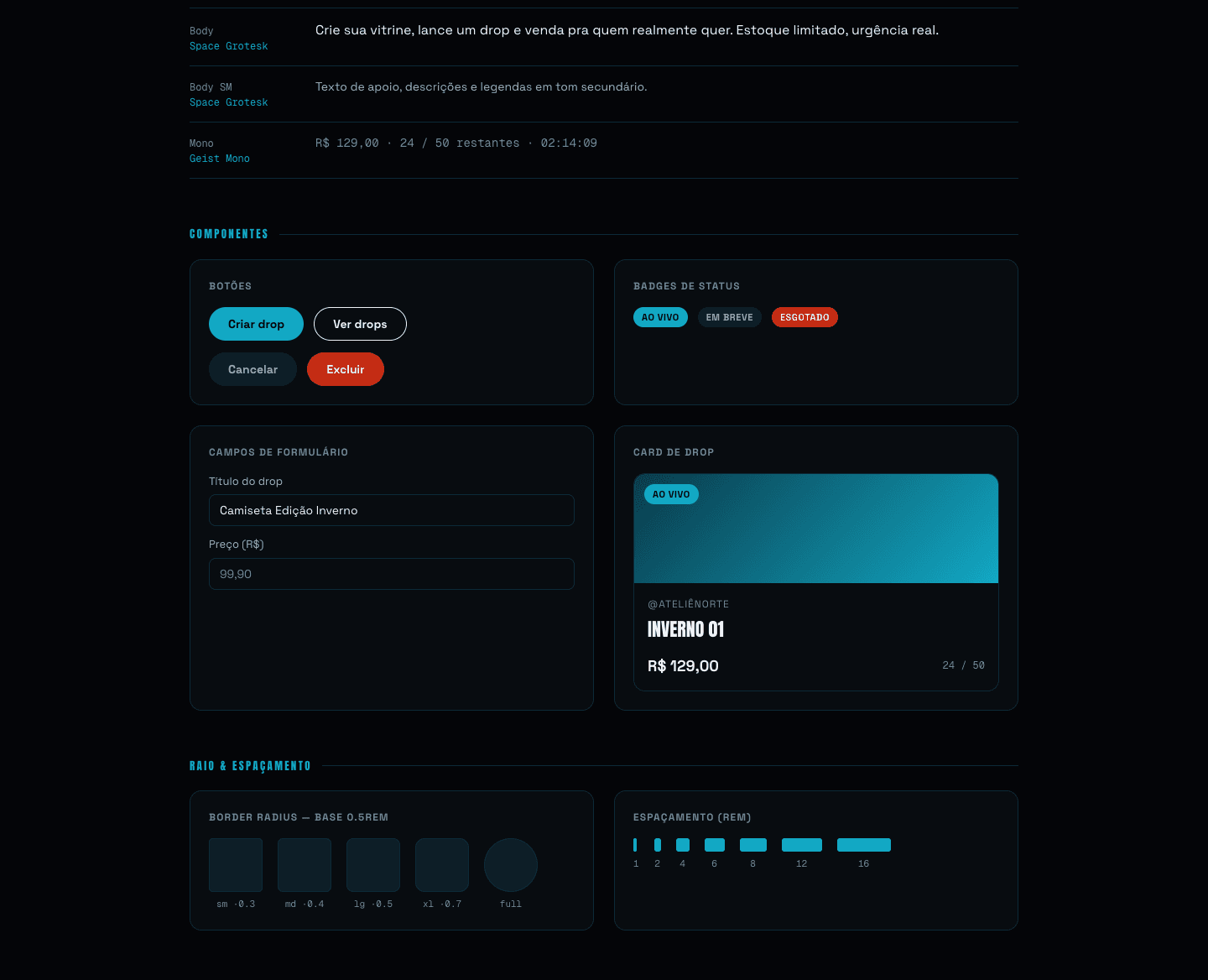
Full-stack on Next.js (App Router) with TypeScript, Prisma + PostgreSQL (Neon), Auth.js v5 (Google + magic link via Resend) and Stripe for payments. Buyers are anonymous (no signup, just an email at checkout); creators are authenticated. Each creator's accent color is injected as a per-request CSS variable, with no hardcoded hex — a token-driven design system as the single source of truth, documented in Storybook. Continuous deploy on Vercel. Product detail: checkout uses no Stripe trial, so a creator upgrades to Pro instantly when they pay.
The project covered the full cycle: competitive analysis, positioning, breadboarding the parts, building in vertical slices and continuous deploy. The key learning: in a space crowded with 'generic stores', the win isn't more features — it's being opinionated: vertical for drops, with Pix, in PT-BR. Focus beats completeness when the ritual of use is the product.
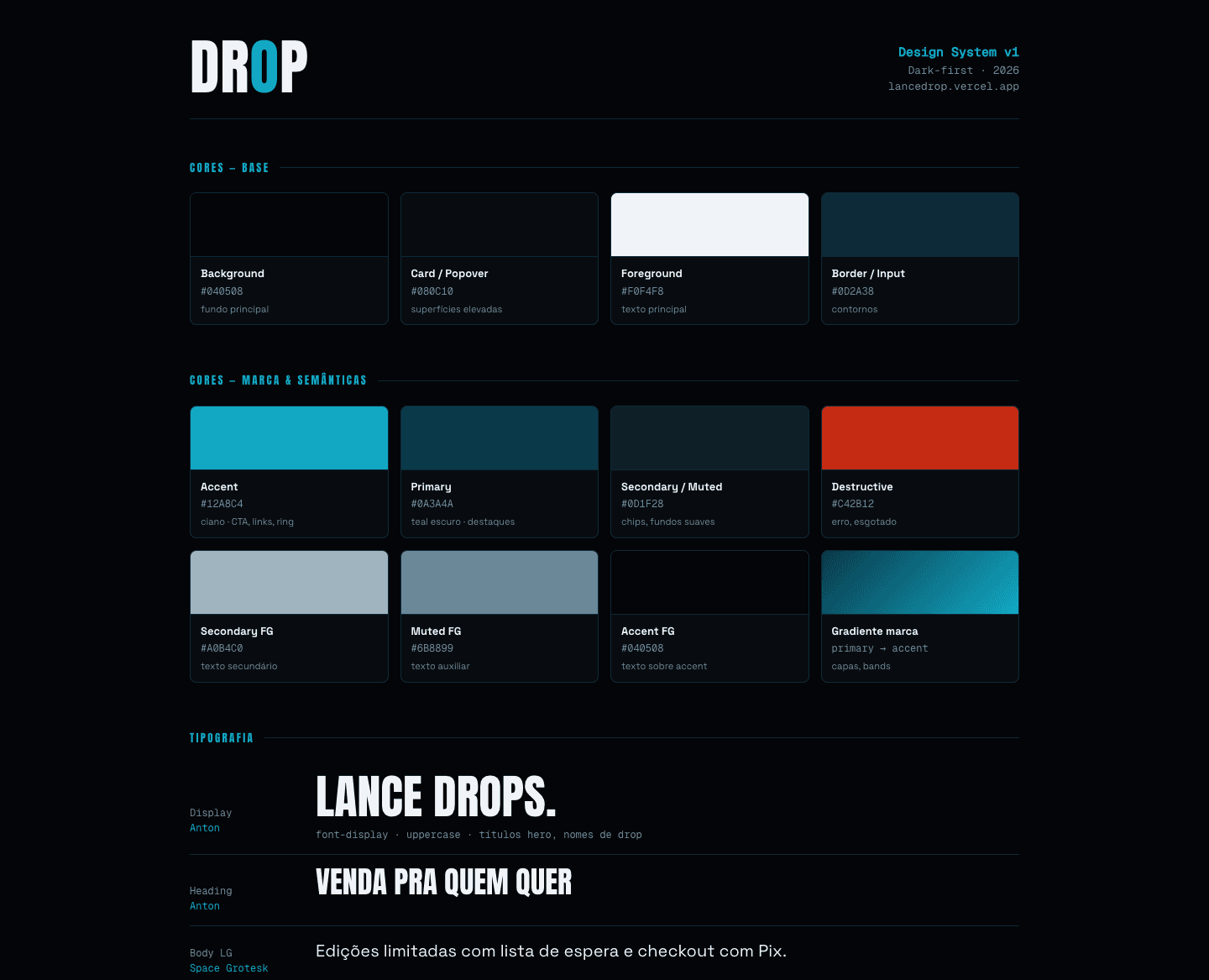
Dark-first by nature: Drop was built to live in darkness — where the product pops. Each creator's accent color is injected as a per-request CSS variable, keeping consistent identity without hardcoding. Anton for drop display titles, Space Grotesk for body text and Geist Mono for numeric data (price, stock, countdown).